By
By By The People News

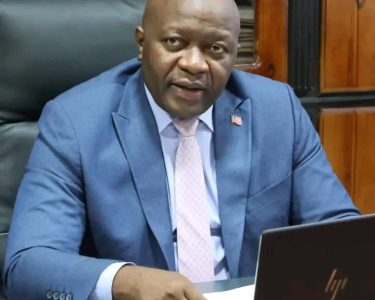
Greenbelt, Maryland, USA – Liberia’s Minister of Finance and Development Planning, Augustine Kpehe Ngafuan, has called on Liberian journalists at home and abroad to use their platforms to promote private sector investment, describing it as the cornerstone of Liberia’s path to sustainable economic growth and development.
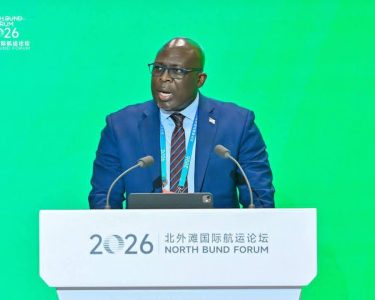
Delivering the keynote address at the 13th National Convention of the Association of Liberian Journalists in the Americas (ALJA) held on Saturday, October 18, 2025, Minister Ngafuan said that while the government is working tirelessly to create an enabling business climate, the media also plays a critical role in shaping investor perception and influencing economic confidence.
Speaking on the theme, “Private Sector Investment: A Key to Sustainable Economic Growth and Development in Liberia—The Role of the Media,” Ngafuan emphasized that responsible, factual, and balanced reporting is essential to Liberia’s development trajectory. He warned that sensationalism and misinformation could discourage investors and derail national progress.
The Minister highlighted President Joseph Boakai’s ARREST Agenda for Inclusive Development (AAID) as the government’s strategic blueprint for transforming Liberia into a lower-middle-income country within five years. The AAID, he noted, aims to reduce poverty, expand infrastructure, and foster a thriving private sector that drives innovation and job creation.
Ngafuan disclosed that under the AAID, the government is investing heavily in agriculture, energy, roads, and education—sectors he described as “catalysts for inclusive growth.” He mentioned ongoing road construction projects, energy expansion through solar and hydro power, and new investments in technical and vocational education aimed at equipping Liberians with 21st-century skills.
He pointed to significant progress made in electricity expansion, with access increasing from 33% to 37% this year. “Our goal,” Ngafuan said, “is to reach 75% access by 2030 while reducing the cost of power to make it affordable for businesses.” He noted that limited and costly power supply remains one of the biggest obstacles to business growth in Liberia.
Turning to specific initiatives, the Minister cited the establishment of the Youth Entrepreneurship Investment Bank (YEIB)—a US$17.8 million project supported by the African Development Bank to empower youth-led enterprises and create more than 100,000 jobs over two decades. He also mentioned a €25 million Private Sector Development Project funded by the European Union and a new partnership with the International Finance Corporation (IFC) to support investments in energy, agriculture, and tourism.
“The government’s success and private sector growth are bound together in a garment of destiny,” Ngafuan remarked, paraphrasing Martin Luther King Jr. “When the private sector grows, government revenues grow—and vice versa.”
He praised ongoing collaboration with the US Development Finance Corporation (DFC) and revealed that the government has drafted its first-ever Public-Private Partnership (PPP) Policy to guide transparent partnerships between state institutions and investors.
Ngafuan also addressed media institutions directly, urging them to be “partners for progress.” He noted that many investors rely on local and international media reports to assess country risk before deciding where to invest. “When journalists report recklessly or without context, they can unintentionally scare away investors,” he warned, adding that objective journalism helps build confidence and stability.
The Finance Minister further announced that the government has begun settling long-overdue debts owed to Liberian media houses for services rendered, saying that a financially stable and independent media is vital to democracy and nation-building. “We have started making payments to verified claims and will continue until all debts are cleared,” he assured.
In a personal reflection, Ngafuan credited the Liberian media for inspiring his career path, recalling how, as a boy growing up in Logan Town, he learned from radio, newspapers, and television broadcasts. “I am what I am today because of the positive impact of the Liberian media,” he said emotionally, adding that journalists have the power to shape minds and mold future leaders.
He urged the Press Union of Liberia (PUL) and ALJA to evolve in response to emerging trends such as social media, citizen journalism, and artificial intelligence, encouraging them to engage online influencers and strengthen professional ethics across digital platforms.
In concluding, Minister Ngafuan cautioned against biased and agenda-driven reporting, stressing that “to be independent does not mean to be anti-government.” He called for balanced coverage that highlights both the successes and failures of government, saying such integrity is essential for national growth.
“The eyes that see the bad must also see the good,” he said. “If we can only see the bad, then it is not the eyes that need help—it’s the heart.”
Ngafuan closed by reaffirming the government’s commitment to working with the media to build a prosperous Liberia. “Let us all strive to do better for our country,” he said, “because to make our nation better, we must all be better.”