 By
By By The People News Online
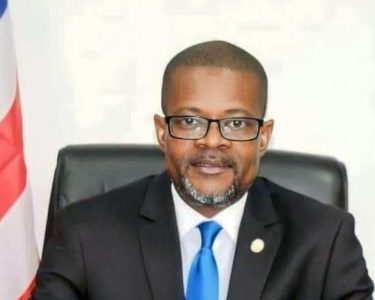
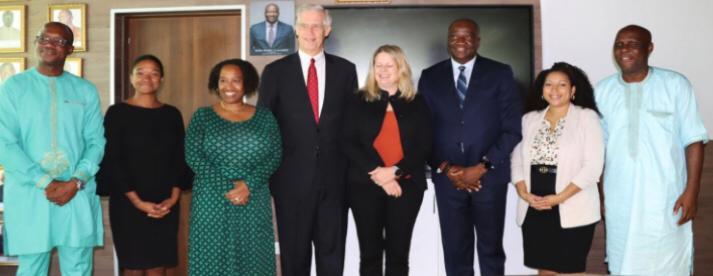
Monrovia, Liberia – Executive Governor of the Central Bank of Liberia (CBL), Henry F. Saamoi, has stressed that boosting Liberia’s economy hinges on urgent improvements in road networks and electricity access. He made the statement during a meeting with the visiting Millennium Challenge Corporation (MCC) team, which is currently reviewing Liberia’s key development needs.
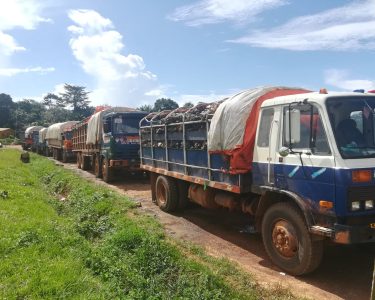
Governor Saamoi explained that inadequate roads and limited electricity remain serious obstacles to progress, restricting small business growth, limiting rural access to financial services, and stalling private sector expansion. He noted that where roads had recently been maintained, farmers were able to deliver produce to markets, stabilizing food prices and easing inflationary pressures.
He praised MCC’s earlier contributions through its first compact—supporting electricity expansion, co-financing the Mt. Coffee Hydro Plant, and funding road maintenance planning. Still, he emphasized that Liberia’s development is being slowed by persistent infrastructure gaps, which continue to hamper private sector growth—the backbone of job creation and empowerment.
“Liberia’s economy must belong to Liberians,” Governor Saamoi declared. “We need stronger infrastructure and inclusive financing so that Liberian businesses—not just foreign investors—can create jobs and propel growth,” he added.
Boosting MSME Financing
The Governor outlined progress under the Liberia Investment Finance and Trade (LIFT) Project, a US$40 million initiative jointly run by the CBL and the Ministry of Commerce & Industry with support from the World Bank.
Through the project’s first-phase US$6M MSME Line of Credit, more than US$2.3 million was disbursed to 112 Liberian-owned enterprises across eight counties. Notably, 54% of these businesses were women-led or women-owned, exceeding gender targets and enabling women entrepreneurs to grow operations, provide jobs, and improve household income.
Governor Saamoi emphasized the urgent need for affordable long-term financing for vital sectors such as agriculture and manufacturing, pointing out that credit to these areas remains extremely limited. He urged development finance institutions, including U.S.-based ones, to work with Liberian banks to extend much-needed long-term capital. He further suggested that risk-mitigation measures such as guarantee schemes would play a crucial role in boosting lending to MSMEs.
Addressing Financial Sector Issues
The Governor also flagged challenges discouraging bank lending, particularly weak rule of law, which undermines loan recovery and deters financial institutions from issuing credit. He reaffirmed CBL’s commitment to deepening financial inclusion, noting that its financial education program has already trained 9,364 people in six counties—58% of them women.
He also highlighted ongoing steps to expand digital finance, including the rollout of a National Electronic Payment System to integrate all banks nationwide and working with Orange and MTN to allow cross-network mobile money transfers. He further revealed that CBL is considering diversifying reserves into gold and may explore partnerships with U.S. firms in the mining sector. Additionally, the Bank is weighing the creation of an agricultural development bank to improve farmers’ access to credit.
Governor Saamoi announced ambitious goals: bringing 75% of Liberia’s adult population into the formal financial system by 2029, safeguarding macroeconomic stability, and pushing reforms to strengthen the independence and autonomy of the Central Bank.
MCC’s Response
The MCC delegation, led by Carrie Monaghan, Managing Director for Africa, thanked Governor Saamoi and his team for their insights. She noted that Liberia’s achievements and persistent challenges will feed into MCC’s ongoing assessment of the most pressing barriers to growth in the country.