 By
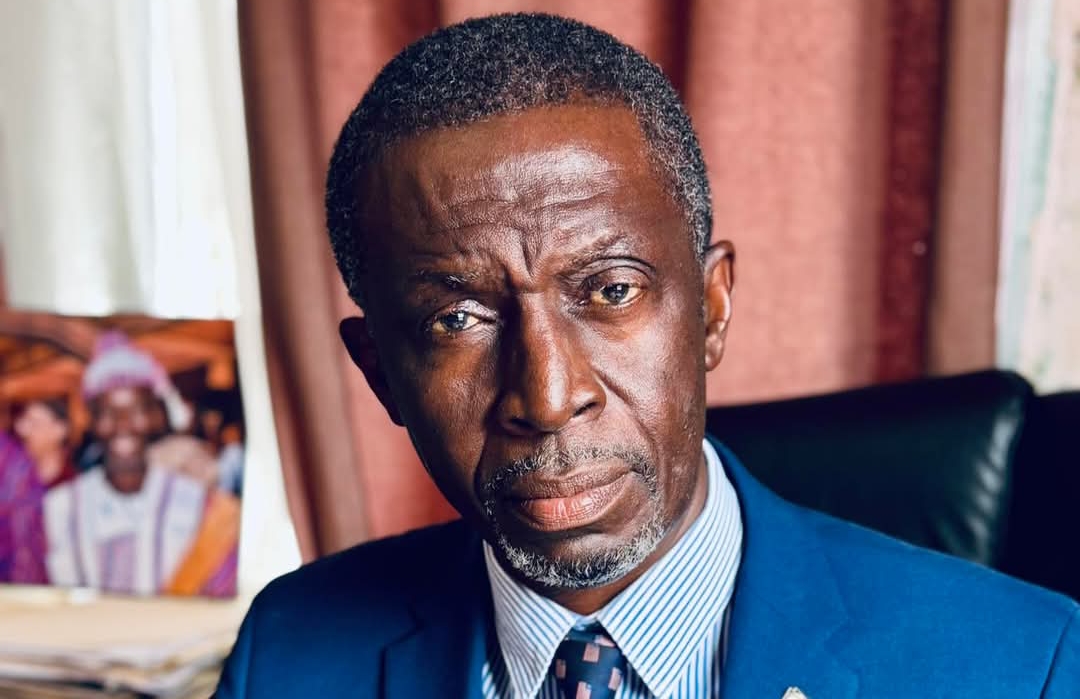
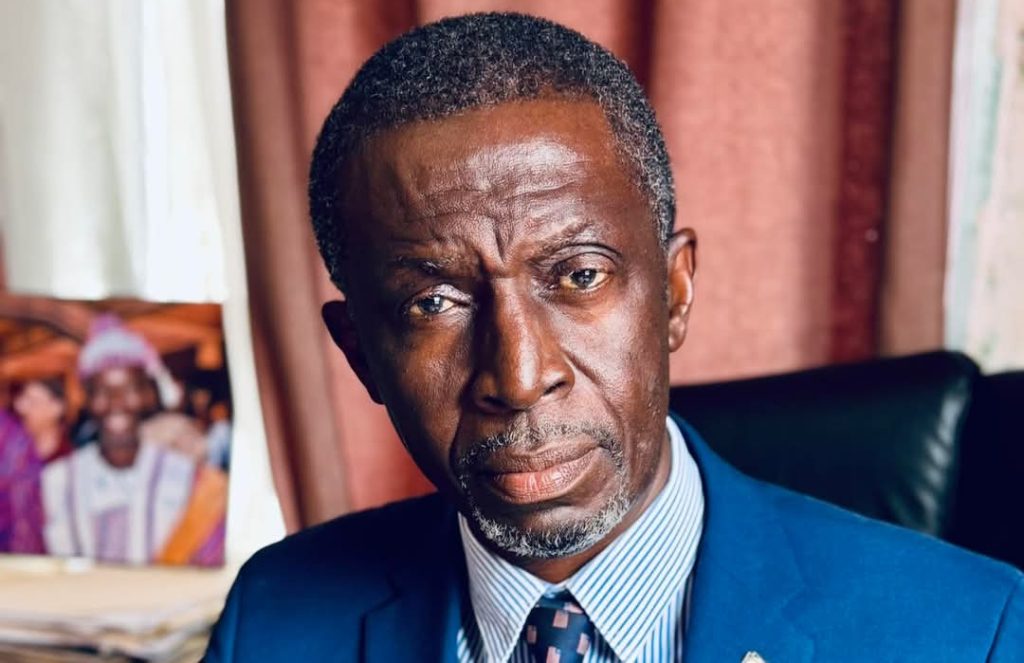
By Commentary by Cllr. Tiawan Saye GongloeSenior Counsel of the Supreme Court of Liberia, Human Rights Lawyer, Former Solicitor General of Liberia, 2023 Presidential Candidate, Assistant Professor of Law and Advocate for Good Governance, Rule of Law, and Economic Justice.
Liberia stands today at a moral and economic crossroads. The growing revelations surrounding the operations of Bea Mountain Mining Corporation in Cape Mount County have brought to the surface a painful truth about our country, one that can no longer be ignored.
We are a nation rich in natural resources, yet our people continue to live in extreme poverty. Recent disclosures indicate that Bea Mountain extracts approximately 900 kilograms of gold per month, with an estimated annual value exceeding one billion United States dollars. Yet Liberia reportedly receives less than 200 million dollars annually, about three percent. This reality compels us to ask a simple but fundamental question: who truly benefits from Liberia’s natural wealth—the Liberian people or foreign corporations?
The situation at Bea Mountain is clear evidence that Liberia is not a naturally poor country. Liberia is a naturally rich country that continues to suffer from poor leadership. If we compare Liberia with Botswana, the contrast is striking. Botswana gained independence in 1966, one hundred and nineteen years after Liberia’s independence in 1847, yet today Botswana is a middle-income country, while Liberia remains among the poorest countries in the world. What explains this difference? It is not a lack of resources. It is not history alone. It is lack of good leadership. Botswana negotiated firmly, protected its national interest, and ensured that its mineral wealth benefited its people. Liberia, on the other hand, continues to enter into agreements where billions are extracted, but only crumbs are received.
Across Africa, countries are increasingly asserting control over their mineral wealth. Ghana has structured its gold sector to generate significant national revenue. Republic of Guinea has taken steps to renegotiate agreements to improve its share. Namibia and South Africa maintain stronger royalty and taxation regimes, while Ivory Coast and Burkina Faso are reforming their mining sectors to increase national benefits. Yet Liberia, with vast deposits of gold, iron ore, diamonds, and timber, remains trapped in agreements that yield as little as three percent.
What kind of country is this?
The paradox becomes even more troubling when we look at governance. We are a country where billions are extracted from the ground, yet the people remain poor. At the same time, public officials live in visible luxury. The President moves with a convoy of between twenty-four and twenty-seven expensive vehicles. The Vice President moves with about fifteen vehicles. The Speaker and President Pro-Tempore and other officials maintain convoys of varying sizes. Yet history tells us that under William R. Tolbert, the President often traveled with just three vehicles, the Vice President with one vehicle and a motorcycle escort, and other senior officials had no convoys. Today, despite higher salaries than many African countries—and even comparable to some developed nations—Liberia remains a begging nation. This is not governance for the people. This is government for the pocket, not for the people.
The injustice is not only economic; it is also environmental and human. Mining-affected communities suffer from polluted rivers, destroyed farmlands, and exposure to dangerous chemicals. Their livelihoods are taken away, yet they receive little or nothing in return. These communities remain among the poorest in Liberia. This is the resource curse in its most painful form: wealth leaves the land, but poverty remains with the people forever.
I speak not only as an observer, but from personal experience. In 2006, I was appointed by Ellen Johnson Sirleaf to serve on a delegation to renegotiate the ArcelorMittal agreement. During the negotiations in New York, I took a firm position in advocating for better terms for Liberia, relying on credible information about the company’s operations. However, I was soon perceived by some members of the Liberian delegation as unreasonable and unnecessarily difficult.
At one point, the head of the company’s negotiating team threatened that the company would leave Liberia. I responded that they were free to leave, but we were there to negotiate for the Liberian people, because once the iron ore is taken, it is gone forever. That was a negotiating tactic, and as a lawyer I understood it. Unfortunately, some members of our own delegation did not. They followed him, appealing to him to return to the table.
Upon returning to Liberia, I was criticized, even by leaders from my own county, Nimba County, who had been informed that I was delaying the agreement. Local voices were incited against me, with some going on the radio to say that their own son was causing delay and should stop. Eventually, I was removed from the delegation without notice. In the end, even critical infrastructure such as the Ganta to Yekepa road was not secured as a binding obligation. That experience taught me a painful truth: Liberian negotiation teams often approach foreign investors as benefactors rather than profit-seeking entities. They focus on concluding deals, not securing fair deals. They do not consistently put the Liberian people first.
Let us be honest. This is not the failure of one administration. It is a systemic failure across successive governments. The same political establishments that have led Liberia since the end of the civil conflict cannot shift blame with any degree of credibility. Those who now express concern were part of the system when these agreements were approved. The question must be asked: were they unaware, or were they silent? Liberia cannot afford selective memory.
Beyond mining, there is another urgent dimension to this crisis—food security. Not having enough money from our natural resources also contributes to Liberia’s food insecurity. Liberia has been identified as one of the hungry countries in the world. Yet we possess vast fertile land capable of feeding our people and even exporting food. Instead, we import what we should be producing. A hungry nation cannot be a stable nation. A hungry man is an angry man. As long as hunger persists, there will always be street protests and unrest, because there are simply too many hungry people.
What kind of country is this, where the land is rich, yet the people are hungry?
The solution is not complicated, but it requires courage and leadership. Liberia must renegotiate unfair concession agreements and build strong negotiation capacity. It must ensure that its natural resources benefit its people. It must enforce environmental protections and require companies to restore and protect affected communities. At the same time,
Liberia must prioritize agriculture and increase food production to reduce hunger and dependency. A nation that cannot feed itself cannot sustain peace or development.
In the end, the truth is clear. A country that exports billions of dollars in gold and other minerals, yet cannot provide clean water, good roads, healthcare, education, and food for its people, is not poor. It is a country suffering from a failure of leadership. Until that changes, our gold will continue to build other nations, while our people remain trapped in poverty.
GOVERNMENT IS A PLACE TO SERVE, NOT TO STEAL!!
A BETTER LIBERIA IS POSSIBLE!!