 By
By By: Staff Writer
Monrovia,Liberia — Liberia’s Minister of State for Presidential Affairs and Chief of Staff to President Joseph Nyuma Boakai, Samuel A. Stevquoh, has issued a public warning about scammers impersonating him on social media to solicit money and offer fake jobs.
Since assuming office, Stevquoh said unknown fraudsters have repeatedly used his name and photos on Facebook, WhatsApp, and Messenger to extort funds from community members. The minister has now released screenshots and phone numbers linked to the alleged scammers, urging the public to remain vigilant.
Minister’s Public Alerts
In a recent post to followers, Stevquoh wrote:
“This is to bring to your attention the following individuals who are impersonating me on various platforms (Facebook, WhatsApp, Messenger, etc.), using my name to solicit funds for fraudulent job offers and other deceptive schemes.”
He added: “Please be advised that I have not, and will never, solicit money or offer employment opportunities through private messages or informal channels. If you receive any such communication from an account claiming to be me, please do not engage, do not send money, and do not provide any personal information.”
The minister listed several numbers linked to the scams:
- Moses Dennis: 0889707580 (Scammer)
- 0889202434 (Scammer)
He also flagged “most known scammers” as: 0889458209 (Albert Momo), 0770101647 (Princess Kamara) — who he said was arrested before and is currently on the run — and 0777725829 / 0889707850.
Evidence of Scam Messages
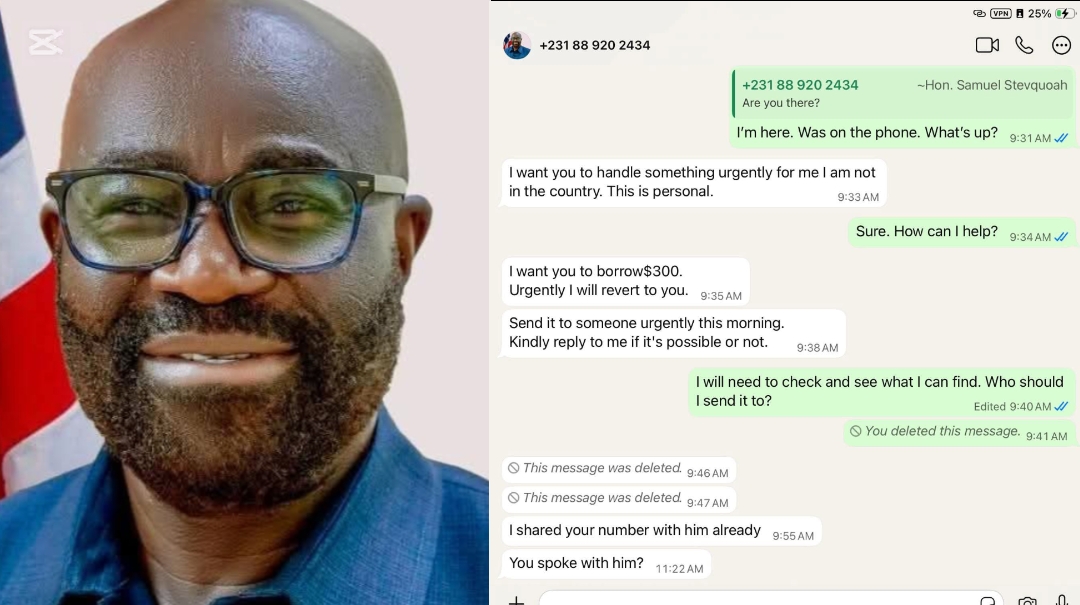
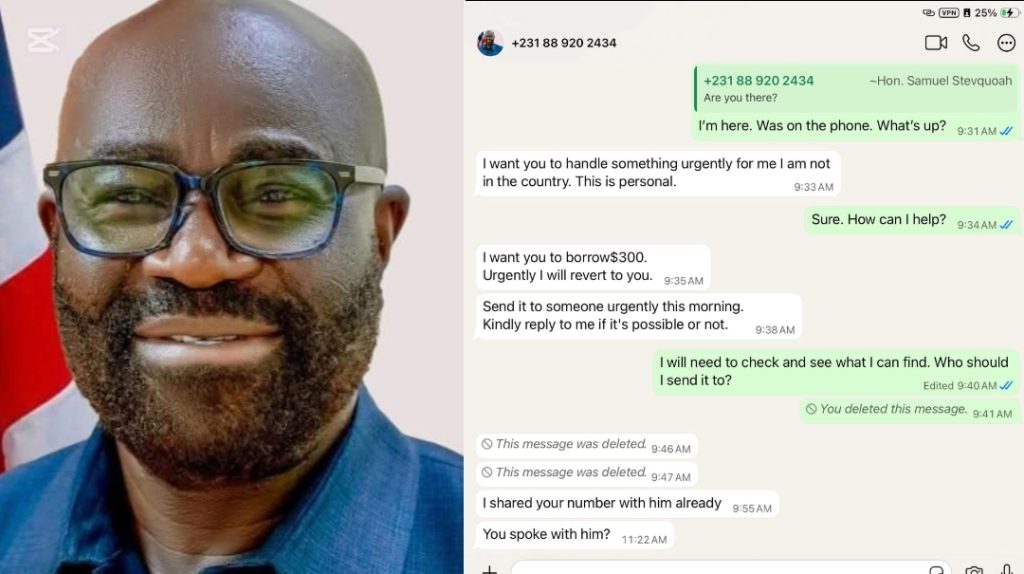
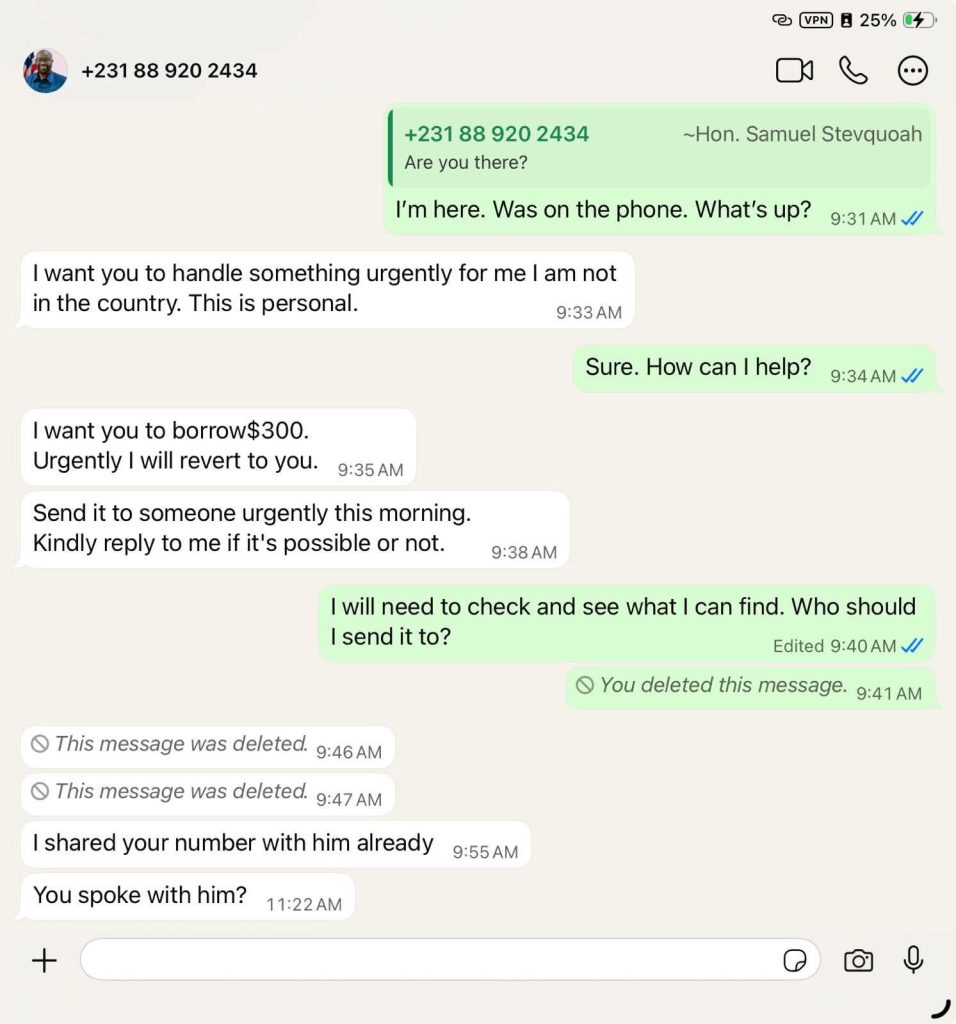
Screenshots shared by the minister show conversations where impersonators claim to be Stevquoh and request urgent financial help. In one WhatsApp exchange from the number +231 88 920 2434, labeled “~Hon. Samuel Stevquoah,” the sender writes: “I want you to handle something urgently for me I am not in the country. This is personal… I want you to borrow $300. Urgently I will revert to you.”
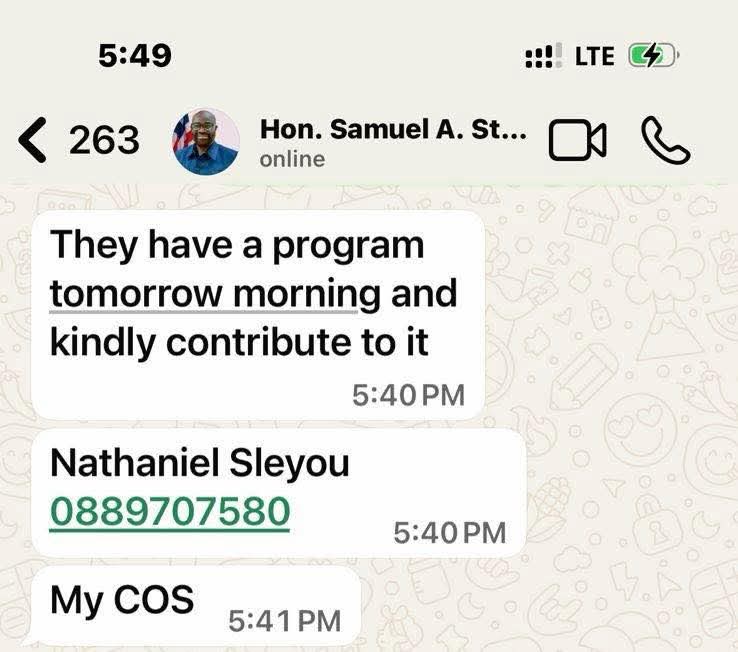
A second screenshot shows another message from an account using the minister’s name and photo: “They have a program tomorrow morning and kindly contribute to it,” followed by the name “Nathaniel Sleyou” and the number 0889707580, with the sender claiming “My COS.”
Earlier Warning Ignored
This is not the minister’s first alert. On January 15, 2026, Stevquoh posted:
“Please stop falling victim to scams perpetrated by unscrupulous individuals using fake profiles bearing my name and photos lifted from the internet and other social media platforms… Too many well meaning and innocent people are being deceived by this scheme.”
He noted that even a close friend of more than 20 years had been deceived.
“I find it difficult to understand how anyone who has known me for years would believe that I would suddenly call from an unfamiliar number to ask for money, whether for a birthday, a sick child, or any emergency,” he wrote. “By the grace of God, I am not desperate, and at no point in my life have I ever solicited money in this manner.”
Stevquoh emphasized: “Let me be very clear. If anyone contacts you asking for money in my name, or in the name of anyone working in my office, please do not respond. Simply call me directly. You all have my number. It is the same number I have always had and the only one I use.”
Growing Pattern of Cyber Impersonation
The impersonation of top government officials is becoming increasingly common in Liberia, especially through cyber channels. Former Deputy Minister of Finance and Development Planning Bill McGill Jones, Chief Justice Yamie Quiqui Gbeisay, and several private citizens have raised similar alarms in recent years, pointing to a rise in cybercrime across the country.
Authorities have not yet announced arrests in connection with the Stevquoh impersonation cases, except for Princess Kamara, whom the minister said was previously arrested and is now on the run.
The minister is asking the public to report the fraudulent accounts to Facebook and other platforms immediately to “help protect our community from these malicious actors.”