By
By By: Alphanso G. Kalama

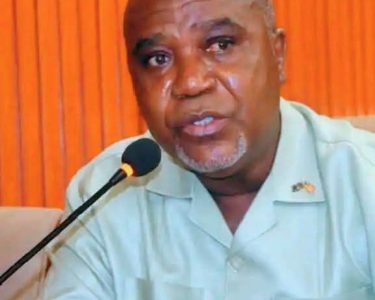
Senator Augustine Chea, Senator of Sinoe County Left while Maryland County Senator James Biney sits on the right
Monrovia, Liberia– A heated debate between two senior Liberian senators has erupted over the ongoing dispute surrounding the House of Representatives’ speakership and the executive branch’s handling of the 2025 national budget submission.
Senator Augustine Chea, a prominent figure in the ongoing speakership controversy, has voiced strong concerns over the government’s decision to submit the draft national budget to the Chief Clerk of the House of Representatives instead of directly to Speaker J. Fonati Koffa. Chea, who supports Speaker Koffa, believes this move undermines the Speaker’s constitutional authority and risks drawing the executive branch into the legislative conflict.
“The failure to submit the budget to Speaker Koffa, and instead sending it to the Chief Clerk, is a replication of the constitutional breaches we saw during the Ellen Johnson-Sirleaf administration,” Chea wrote. He argues that this action disregards the Speaker’s rightful authority, exacerbating the political tension in the House of Representatives.
Chea also weighed in on the recent decision by the Justice in chamber, who dismissed Speaker Koffa’s petition for a writ of prohibition, which sought to stop the so-called “majority bloc” in the House from conducting sessions. Chea interpreted this ruling as a clear message that the dispute over the Speakership is a political issue, not a legal one, and should be resolved by the legislature itself.
“Speaker Koffa remains the legitimate Speaker unless removed by a two-thirds majority vote of the House, as the Constitution mandates,” Chea wrote. “The executive should follow the law and submit the budget to the Speaker when he has a quorum, as required by the Constitution.”
In contrast, Senator James Biney, a colleague in the Senate and an outspoken critic of Chea’s position, has pushed back, questioning whether the Speaker is the appropriate recipient of the budget under the current circumstances. Biney argues that the real power in the legislature lies with the majority, not the presiding officer.
“I disagree with Senator Chea’s position that the Executive should only work with the Speaker in this situation,” Biney remarked in his response. “The Constitution clearly states that a simple majority in each house constitutes a quorum for transacting business, regardless of who presides.”
Biney further emphasized that in the absence of a quorum or a presiding officer, such as the Speaker or Vice President, the most senior ranking member can preside over legislative business. He pointed to recent precedents, including the passage of the recast budget, where the Vice President was present, but he, as the Chair of the Senate’s Executive Committee, presided over the vote due to the absence of the presiding officer.
Biney also questioned the logic of submitting the budget to Speaker Koffa in light of the ongoing deadlock in the House. “What good would it do to submit the budget to the Speaker when the House cannot even meet or conduct business properly due to the lack of a quorum?” Biney asked. “The Chief Clerk is the appropriate recipient of such communications, as required by the Constitution, and the budget should be presented to the entire legislature, not just the Speaker.”
Biney warned that focusing too much on the speakership dispute could undermine the President’s relationship with the majority in the legislature. He cautioned that the President should avoid a situation where failing to recognize the majority in the House could have serious consequences for his administration.
“As long as a quorum is present, the majority in the House has the constitutional authority to approve the budget,” Biney explained. “The presiding officer’s role, whether it is the Speaker, Vice President, or President Pro Tempore, is secondary to the will of the majority.”
This back-and-forth between the two senators highlights the growing divide not only between the executive and legislative branches but also within the legislature itself. The House of Representatives has been paralyzed for weeks due to the ongoing leadership dispute, complicating the passage of key legislation, including the national budget.
The executive branch now faces pressure from both sides of the political spectrum, with some lawmakers urging the President to submit the budget directly to the legislature as a whole, while others argue that the Speaker remains the constitutionally mandated point of contact for such submissions.
With the budget deadline fast approaching, it remains to be seen how the political standoff will be resolved and whether the legislature can overcome its internal divisions in time to approve the national budget for the 2025 fiscal year.