By
By Credit of this Report is to CNN
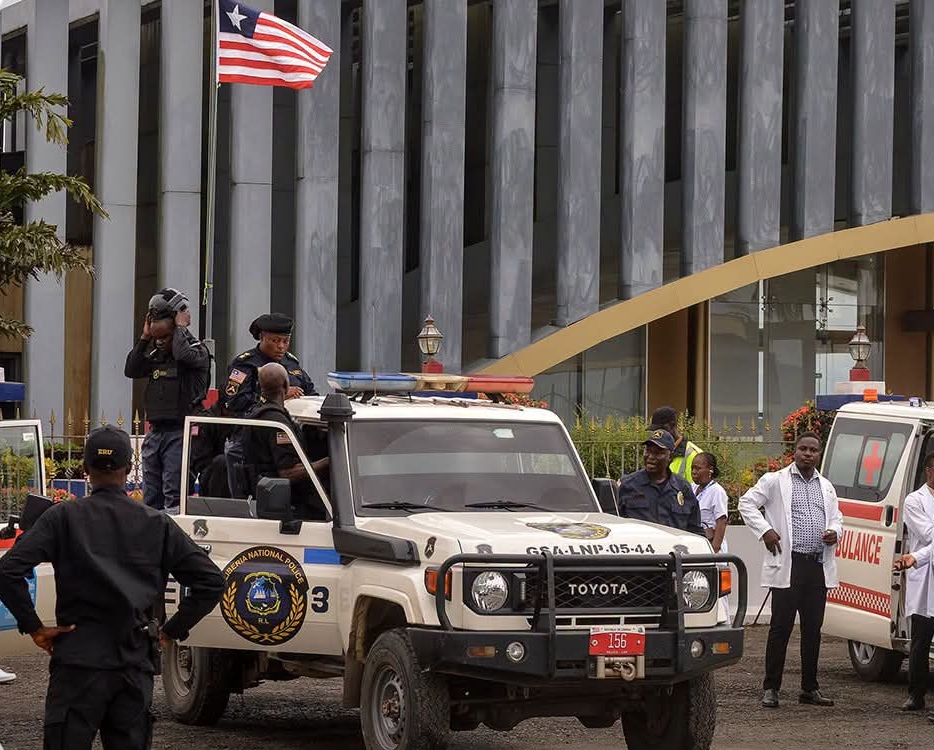
Liberia, founded nearly 200 years ago by free and formerly enslaved Black Americans seeking refuge, received its first group of migrants deported from the United States this week — reigniting a national debate over sovereignty, capacity, and history.
Twenty people landed in Monrovia on a flight from Louisiana. They are the first to arrive under an agreement that could see up to 1,200 people transferred to Liberia, a country of less than 6 million. Liberian officials said the arrivals came from “African and western hemisphere countries.”
The transfer is part of the Trump administration’s anti-immigration crackdown. Liberia is among several nations that have agreed to take migrants removed from the US.
The process was not smooth. According to Reuters, five migrants refused to disembark in Monrovia and were flown instead to Equatorial Guinea, where they joined more than 30 others previously sent there by the US.
A US State Department spokesperson said implementing the administration’s immigration policies was a “top priority,” and declined to comment on diplomatic communications. CNN has contacted Liberia’s information ministry for details on the agreement and its terms.
History echoes in the present
The arrival lands in a country literally shaped by American migration. In the 1820s, free Black Americans began settling what would become Liberia — “land of the free.” About 16,000 made the journey in the 19th century. Africans rescued from slave ships by the US Navy were also brought here. The settlements declared independence in 1847.
That legacy is visible today: Liberia’s flag mirrors the US flag, the capital is named for President James Monroe, and early institutions were modeled on Washington’s.
For many, that history complicates the current moment.
“This country is going through a lot, and having more people come in — can we handle all of this?” asked Pheta Morris, 48, a descendant of Americo-Liberians.
Yet she also sees a parallel:
“I think about the Americo-Liberians — people who were rejected where they were and needed somewhere to go, and Liberia opened its arms to them. Back then, people needed somewhere they could be free, accepted and welcomed. Now, people are being rejected from the US, and Liberia is opening its doors to them.”
A fragile state, limited resources
Liberia is still rebuilding after a 14-year civil war that ended in 2003. Poverty remains high and youth unemployment is at 40%, according to African Development Bank data.
Conmany Wesseh, a former lawmaker and ex-ambassador under President Ellen Johnson Sirleaf, questioned the country’s ability to cope.
“Our country needs a great deal of support,” Wesseh said. “We are short on medical facilities, and we have problems with education.”
He pointed to immediate problems: “They will have to go to the same hospitals. You won’t create a new hospital for them. There’s no spare housing. We don’t have existing housing to put new people in.”
Wesseh suggested the government agreed to the deal hoping for US support, but he characterized the arrangement differently:
“I think (the administration of US President Donald Trump) just sees this as a place to dump people. They want to take them off their hands and dump them in this country.”
Liberian authorities describe the agreement as humanitarian. Officials say deportees will be treated as guests and can seek asylum or leave the country.
Opportunity or burden?
Francis Dennis, 71, former president of the Liberia Chamber of Commerce, recently traced his ancestry to a Black American who sailed from Snow Hill, Maryland to Liberia in the 1800s.
He sees potential in the new arrivals.
“People may have their apprehension about a new life, but it’s also an opportunity,” Dennis said. “Some may be happy, some may resent it, but it opens a new window, a new opportunity.”
“The ball will be in their court,” he added. “Are they going to seize it as an opportunity for a new start, a fresh start, a new life? Or will they be thinking about the past?”
As Liberia prepares for more arrivals, the question remains: can a nation founded as a refuge for those rejected by America now afford to be one again?