 By
By By: Staff Writer

Monrovia — The opposition-aligned CDC–Council of Patriots (CDC–COP) has launched a blistering attack on the Boakai–Koung administration, warning that Liberia is “dying before our eyes” amid collapsing public services, mass unemployment, and what it describes as a dangerous disconnect between foreign policy decisions and domestic realities.
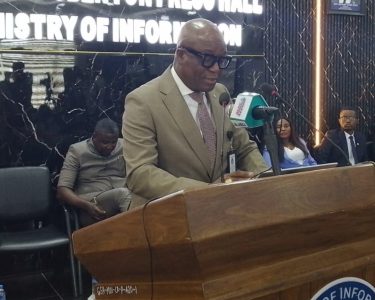
Speaking at the group’s first formal media engagement of 2026, CDC–COP National Chairman Foday N. Massaquoi said the organization was compelled to speak out because “silence has become dangerous,” insisting that the nation’s conscience must now “speak with clarity, courage, and resonance.”
“CDC–COP did not come for attention,” Massaquoi declared. “We came because the integrity of the Liberian State is under threat, and ordinary Liberians are paying the price.”
At the center of the controversy is a January 9 letter the group said it addressed to the United States Embassy in Monrovia. According to Massaquoi, the communication sought to distance the Liberian people from the position taken by the Boakai administration at the United Nations concerning Venezuela—an action delivered by Liberia’s Permanent Representative to the UN, Lewis Brown.
“That position does not reflect the priorities, the suffering, or the urgent needs of the Liberian people,” Massaquoi argued, describing it as “diplomatic noise that lacks domestic meaning.”
CDC–COP painted a grim picture of life under the current administration, citing failing hospitals, schools without learning materials, worsening insecurity, and what it termed a national unemployment emergency. Massaquoi claimed nearly 90 percent of Liberians are jobless, while referencing World Bank data indicating that almost 60 percent of adolescent girls are out of school and nearly half are pregnant.
“At such a critical moment,” he said, “the government chose controversial international posturing instead of confronting the harsh realities at home. This dissonance is deafening.”
Beyond economic hardship, the group raised alarms over internal governance, alleging police brutality, corruption within security institutions, and uninvestigated cases involving abuse of minors. These unresolved cases, Massaquoi warned, have fueled perceptions of impunity and institutional decay.
The most explosive allegation, however, involved claims that foreign business interests may have influenced Liberia’s diplomatic stance at the UN. Massaquoi cited allegations linking Oranto Petroleum boss Arthur Eze to Liberia’s foreign policy direction through personal and business relationships with members of the First Family.
“These are allegations,” he acknowledged, “but their gravity alone demands an immediate, transparent, and independent investigation. When questions of national integrity arise, silence is not neutrality. Silence is surrender.”
While reaffirming the historic ties between Liberia and the United States, CDC–COP urged the international community to distinguish between the actions of government officials and the will of the Liberian people, warning against measures that would further burden an already struggling population.
In a rare move, the group publicly named senior officials it said should be held politically accountable for both foreign policy decisions and broader governance failures, including President Joseph N. Boakai Jr. and several top officials and relatives of the First Family.
“Accountability is not revenge,” Massaquoi stressed. “It is a democratic duty and a moral imperative.”
Concluding his address, the CDC–COP chairman warned that nations do not collapse overnight but crumble when corruption is normalized and incompetence tolerated.
“The warning signs are blinking. The alarm bells are ringing,” he said. “We choose the Republic over personal interest.”
The statement, sanctioned by the CDC–Council of Patriots’ National Executive Council, signals a potentially turbulent political season ahead as opposition forces intensify scrutiny of the Boakai administration’s domestic governance and international posture.