By
By By: Alphanso G. Kalama;

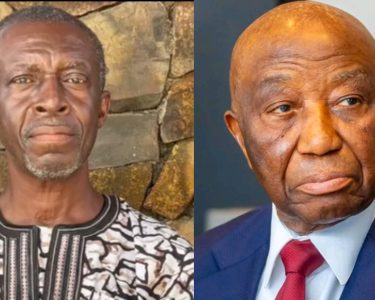
Vice President Jeremiah Koung has issued a sharp response to Grand Gedeh County Senator Thomas Yaya Nimely’s controversial tribute regarding the late Nimba County Senator Prince Y. Johnson, firmly asserting that Johnson was never guilty of war crimes and should be remembered as a national hero.
Speaking at Johnson’s burial ceremony, Koung countered Nimely’s portrayal of Johnson as a figure who sought to “buy time” to evade prosecution for alleged war crimes. Instead, Koung emphasized Johnson’s innocence and his enduring legacy as a defender of his people.
“When you [Nimely] said, ‘Why can’t you forgive Senator Johnson?’ I thought he was going to wake up, because he would never accept that he was guilty. He was never guilty,” Koung declared. “And because he was never guilty, he signed the war crimes court resolution because he wanted to go to court and tell the people of this country that he defended this nation and his people.”
The Vice President passionately affirmed Johnson’s innocence, stating that no court, either domestic or international, had ever found him guilty of war crimes. “There is no court in this country or internationally that found him guilty. That’s why we celebrate him as our hero,” Koung said, adding that Johnson’s unparalleled funeral turnout reflected the deep respect and admiration he commanded.
Hero of Nimba
Koung described the overwhelming public mourning for Johnson as a testament to his stature in Liberian history. “Maybe apart from the death of the late William V.S. Tubman, no former leader has died and received the kind of support, crowd, and honor that Senator Johnson is receiving,” Koung stated.

He recounted the tributes pouring in from across Nimba County, with thousands gathering in towns like Ganta, Sankara, and Saclepea to honor the late senator. “If you entered Ganta on the day we did, you would know that a tree has fallen. You would know that a hero has gone to rest,” Koung said.
A Direct Rebuttal to Nimely
Nimely’s earlier tribute sparked controversy for characterizing Johnson as a man who relied on political maneuvering to avoid accountability. Nimely claimed Johnson struck deals with successive presidents, including Ellen Johnson Sirleaf and George Weah, to delay the establishment of a war crimes court.
However, Koung dismissed these claims, framing Johnson as a man of courage and integrity who faced criticism head-on. “If you [Johnson] were alive, you would wake up to respond immediately, because that’s the man you were. But since you can’t speak now, we will say it for you: You are not guilty. You were never guilty,” Koung said.
A Divisive Legacy
Prince Y. Johnson’s death has reignited debate over Liberia’s post-war justice and reconciliation efforts. A former warlord turned senator, Johnson remained a polarizing figure, hailed by some as a defender of his people and condemned by others for his role in Liberia’s civil war.
While Nimely argued that Johnson was never forgiven by Liberians, Koung painted a contrasting picture, portraying Johnson as a hero who earned the love and respect of his people.
As the debate over Johnson’s legacy continues, his burial has brought to the forefront Liberia’s unresolved questions about accountability and healing. For Vice President Koung and many in Nimba, however, the message is clear: “Senator Johnson was never guilty, and we bury him as a hero.”