By
By By: Alphanso G. Kalama,
Email: alphansokalama@gmail.com
Monrovia, Liberia – In a recent address, Madam Emman Metieh Glassco, Director General of the National Fisheries and Aquaculture Authority (NaFAA), emphasized the vital role of small-scale fisheries in Liberia’s fishing industry, calling them the heartbeat of the nation’s fishing communities. Speaking at the Royal Hotel in Monrovia on September 10, 2024, during the opening of a three-day workshop focused on developing a small-scale fisheries training curriculum, Glassco underscored the importance of these fisheries in supporting livelihoods for millions, particularly vulnerable groups like women, youth, and Indigenous fishers.
Glassco pointed out that small-scale fisheries are crucial for food security, nutrition, and income in many rural areas of Liberia. She noted that these fisheries not only provide essential fish for consumption but also contribute to economic growth, social stability, and environmental sustainability. Despite their significance, small-scale fisheries have often been overlooked, under-documented, and under-supported. Glassco called for a shift in perspective to better acknowledge and address their needs.

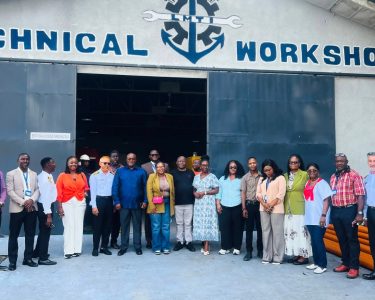
DG Glassco, World Bank Country Manager, and others in Group Photo
The Director General emphasized the government’s commitment to the “Illuminating Hidden Harvest” approach, which aims to fully reveal the scope, challenges, and potential of small-scale fisheries. This approach will help the Fisheries Authority make informed decisions and develop policies that effectively address the real needs of fishers, thereby enhancing the sector’s resilience.
In her opening remarks, Glassco recommended that the new training curriculum prioritize inclusivity, sustainability, and collaboration. She urged that the voices of women, youth, and marginalized groups be central to discussions and decisions. She also highlighted the need for sustainable management of fisheries resources and emphasized the importance of cooperation between government, communities, international organizations, and the private sector.
World Bank Country Manager Georgia Wallen also spoke at the event, stating that it represents a significant investment in Liberia’s future fisheries and aquaculture leaders. Wallen praised the adoption of the “Illuminating Hidden Harvests” approach and congratulated all stakeholders for their dedication and collaboration. She noted that the World Bank is committed to ending extreme poverty and promoting shared prosperity, including through funding for the Liberia Sustainable Management of Fisheries project.
Wallen highlighted the establishment of the Fisheries and Aquaculture Science Program (FASP) at the University of Liberia as a key outcome of the World Bank’s partnership. She emphasized that FASP has the potential to transform fisheries management, agriculture, fish processing, and marketing in Liberia. The program aligns with Liberia’s national development goals and is essential for building the technical expertise needed for sustainable fisheries management.
Wallen concluded by expressing optimism about the future, noting that over 100 students have enrolled in FASP’s first two semesters. She looked forward to the completion of the regional center of excellence for fisheries sciences and governance at the University of Liberia, which will support faculty training and further the development of Liberia’s fisheries sector.