 By
By By: Alphanso G. Kalama
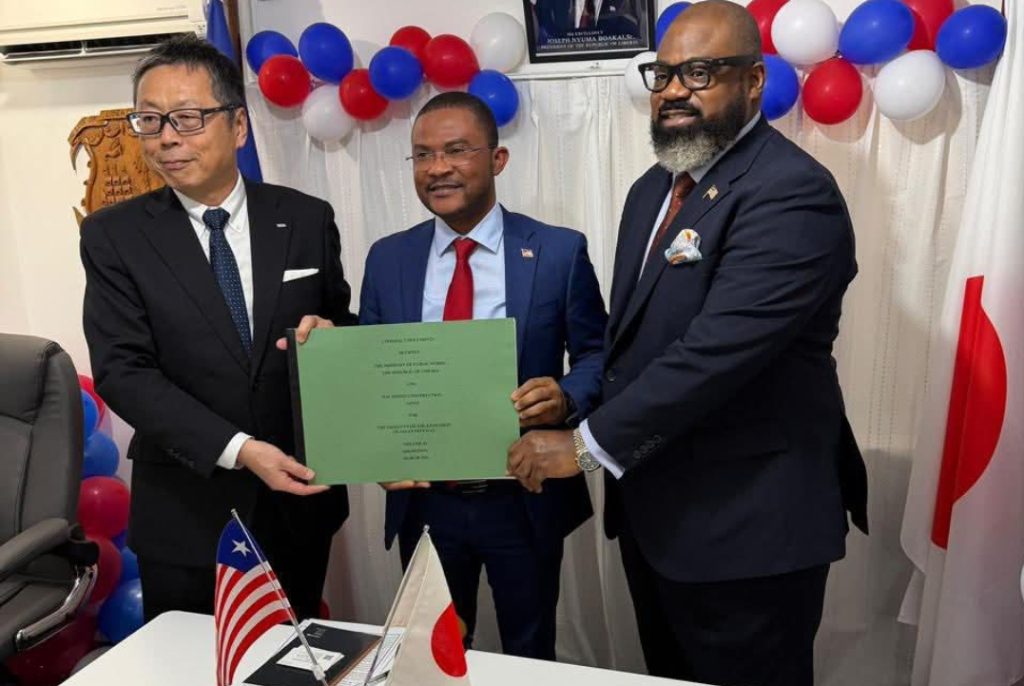
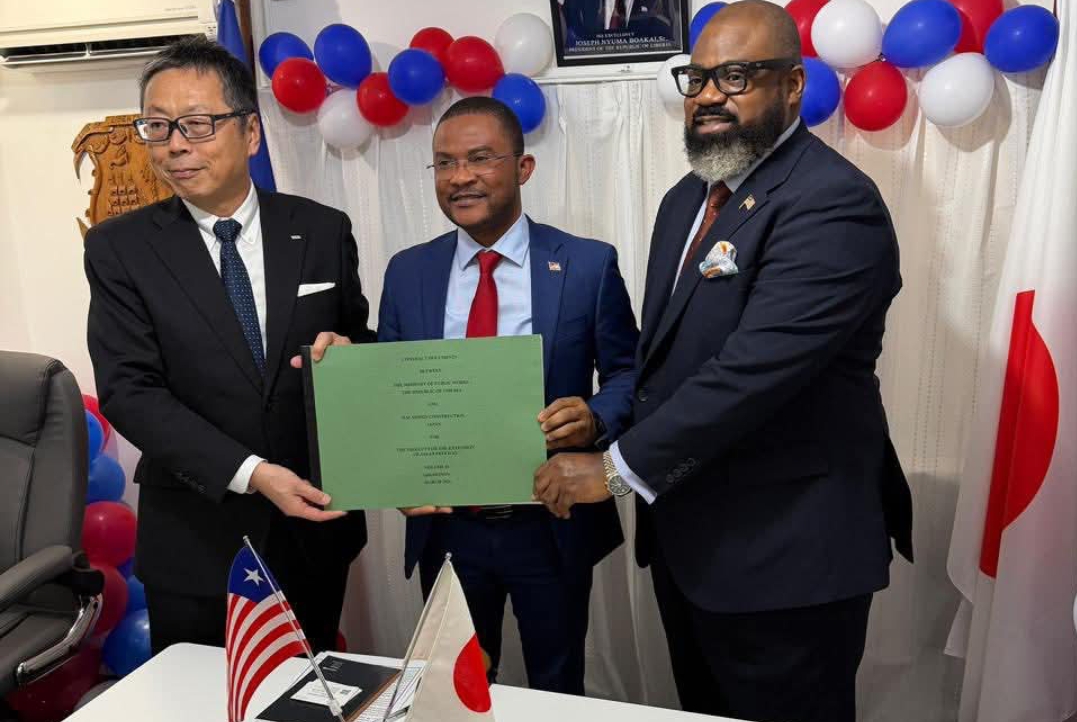
MONROVIA, Liberia — The Government of Liberia has secured a major infrastructure boost after signing a 2.45 billion Japanese yen grant—approximately $16 million—with the Government of Japan to rehabilitate a critical roadway connecting the Freeport of Monrovia to key commercial areas of the capital.
The agreement, finalized in Tokyo, will fund the reconstruction of the Gabriel Tucker Bridge** corridor, a 1.9-kilometer dual-carriageway that serves as one of Monrovia’s busiest commercial transport routes.
The deal was signed by Prince Tambah, Deputy Minister for Technical Services at the Ministry of Public Works, following a week-long series of engagements in Japan with the Japan International Cooperation Agency (JICA) and Eight-Japan Engineering Consultants Inc..
Under the agreement, Dai Nippon Construction will undertake the rehabilitation and reconstruction of the vital roadway leading to the Gabriel Tucker Bridge. Authorities say the contractor is expected to mobilize to Liberia in May, with full-scale construction slated to begin in July. The project is projected to take approximately 26 months to complete.
Funded entirely through a grant from the Japanese government, the initiative highlights the growing development partnership between Liberia and Japan, particularly in the area of infrastructure development.
Officials say the rehabilitation will significantly reduce traffic congestion and enhance the movement of goods between the Freeport—Liberia’s primary maritime gateway—and the capital’s major commercial districts. The project will also address persistent flooding that has long plagued the corridor during the rainy season.
Speaking on the agreement, Tambah expressed gratitude to the Japanese government for its continued financial and technical assistance, describing the project as a key milestone in the government’s efforts to modernize Monrovia’s urban road network.
He also credited Sara Beysolow Nyanti and Edward Wade Appleton Jr. for their diplomatic engagement that helped facilitate the agreement.
Meanwhile, Roland Lafette Giddings and officials at the Ministry of Public Works were recognized for advancing the project from the planning stage to implementation.
Upon completion, the upgraded corridor is expected to improve transportation efficiency, strengthen drainage systems, and support economic activity linked to the port—one of Liberia’s most critical logistics and trade hubs.
The project represents one of several recent initiatives by the Liberian government aimed at strengthening international partnerships to address long-standing infrastructure challenges in the capital city.