 By
By By: Alphanso G. Kalama
Liberia has renewed its call for a fair, realistic and equitable framework for decarbonizing international shipping, warning that the push to net-zero emissions must not place disproportionate economic burdens on developing countries.
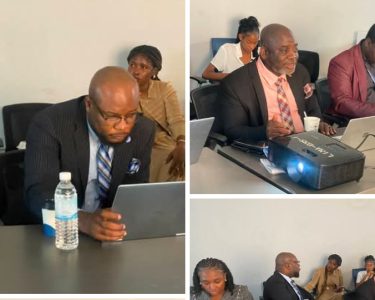
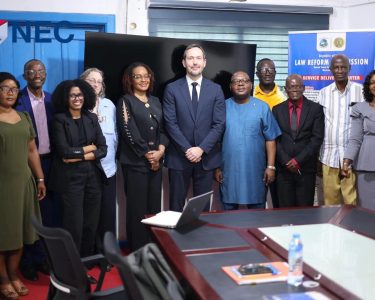
The position was presented in New York on September 23, 2026, during a high-level engagement with United Nations Member States, where Liberia outlined its alternative approach to the International Maritime Organization’s (IMO) Net-Zero Framework.
The presentation forms part of Liberia’s ongoing engagement on how to achieve the goals of the 2023 IMO Strategy on Reduction of Greenhouse Gas Emissions from Ships, while keeping the transition equitable.
Liberia, one of the world’s largest flag states and a climate-vulnerable developing country, said it fully supports ambitious climate action and recognizes the maritime sector’s responsibility to cut greenhouse gas emissions.
However, the country argues that climate ambition and protection of developing economies are not contradictory. Its proposed approach calls for a transition that is pragmatic, performance-based, affordable, scalable, equitable and legally coherent within the IMO mandate.
Central to Liberia’s concern is the impact on trade, food and energy security. International shipping moves food, fuel, medicines, machinery and construction materials essential to developing countries. Liberia cautioned that a sharp rise in maritime transport costs could fuel inflation, undermine trade competitiveness, threaten food and energy security, and derail sustainable development.
The country is therefore calling for country-specific economic impact assessments, noting that developing nations differ in economic structure, trade profile, technological capacity, infrastructure and access to finance. A single global assessment, Liberia argues, cannot capture these vulnerabilities.
Liberia’s proposal emphasizes commercially viable alternative fuels, operational and technological efficiencies, port infrastructure development and capacity-building as practical pathways to decarbonization.
It is also advocating for support mechanisms that are predictable, transparent and genuinely responsive to developing countries’ needs. According to Liberia, developing nations should not be forced to absorb major economic shocks first on the promise of later compensation. The framework should be designed from the outset to minimize disproportionate costs.
The country further stressed the need for evidence-based policymaking, urging the IMO to thoroughly examine the technical credibility, legal coherence, administrative workability, affordability and scalability of proposed fuels and measures across regions, ports and routes.
Liberia said its position does not seek to weaken climate ambition, but to ensure climate action and sustainable development advance together. It warned that the IMO’s legitimacy depends on the confidence and meaningful participation of all member states — developed and developing, large and small.
“Net zero must not become a new burden on developing countries,” Liberia emphasized, adding that the transition should instead unlock opportunities for investment, technology transfer, infrastructure development and capacity building.
The IMO and member states are expected to continue deliberations on the Net-Zero Framework at the next session of the Marine Environment Protection Committee (MEPC) in November 2026. Liberia says it will remain actively engaged in the lead-up to that meeting.