By
By 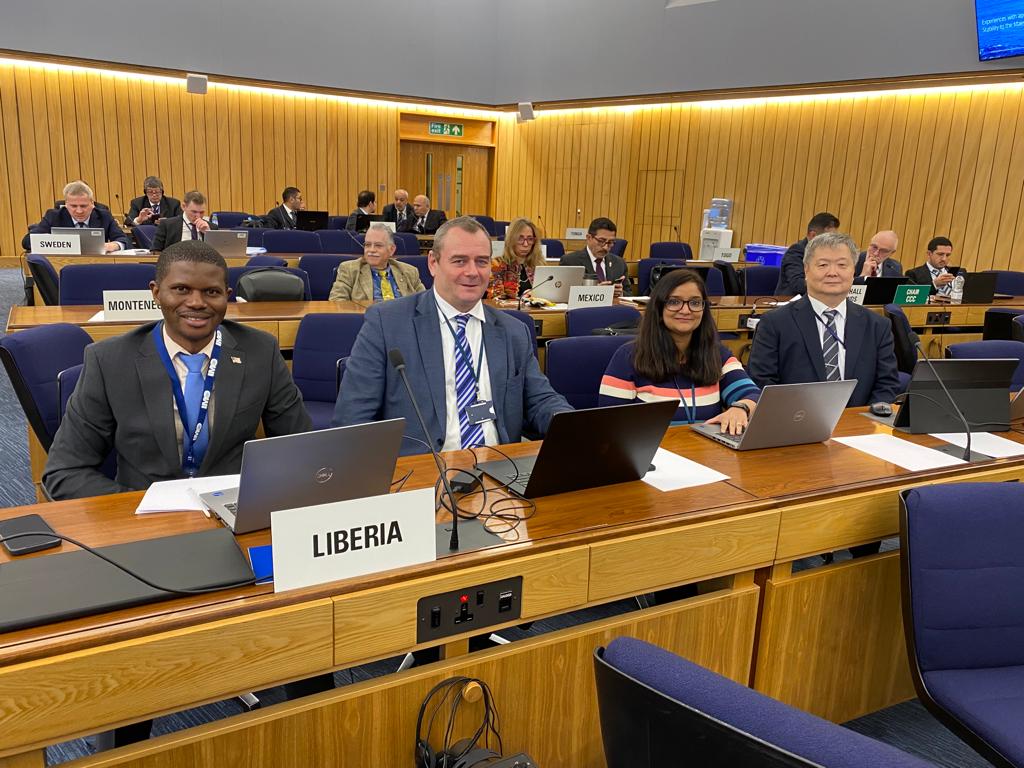
LONDON, — Liberia, with co-sponsors Argentina and Panama, will submit a revised emissions proposal to the International Maritime Organization’s Marine Environment Protection Committee (MEPC) at its 84th Session, seeking to break a deadlock that stalled the previous Net Zero Framework last year.
The earlier framework polarized member states and drew strong opposition, including from the United States, during one of the IMO’s most contentious sessions. A vote on October 17, 2025 failed to secure a decisive outcome, with members opting to adjourn and rework the text. The IMO has traditionally prioritized broad-based consensus, a factor seen as critical to effective implementation of measures that rely on moral force rather than formal enforcement mechanisms.
The new Liberian draft removes a central element of the prior plan: a proposed IMO fund that would have collected fines for non-compliance. Some member states viewed the fund as punitive, arguing it would disproportionately affect smaller shipowners and tramp vessels. Questions were also raised about how proceeds from fines on “dirty” ships would be allocated and overseen. Critics said the structure amounted to a tax on shipping without a direct link to beneficiaries of shipping services.
Instead, the revised proposal shifts toward incentives to accelerate adoption of lower-emission fuels and technologies. It links targets to fuel availability and uptake, and expands the scope to include well-to-wake emission reductions regardless of energy source. The draft also references emission-reducing technologies such as onboard carbon capture systems and wind-assisted propulsion, areas supported by shipowners’ associations. Under the plan, targets would be set on a five-year cycle to account for the rollout of fuels and technologies and to give owners a framework for fleet planning.
Attention is now on how U.S. delegate Marco Sylvester, Deputy Assistant Secretary for Transportation Affairs, will respond to the new approach. While Sylvester has previously opposed emissions measures, three former opponents — Liberia, Argentina and Panama — are sponsoring the current draft. Saudi Arabia and other Gulf countries that rejected the earlier proposals are also backing what supporters describe as a pragmatic framework.
Senior national representatives attending the MEPC session are expected to address wider maritime security issues as well. Discussions may cover the Strait of Hormuz, where Iran has sought to introduce controls and tolls over a Traffic Separation Scheme adopted by the IMO in 1968. The scheme was approved by broad consensus and remains binding on the 164 signatories to the IMO’s Convention on Safety of Life at Sea, including the United States, Iran, Oman, and other Gulf states. Singapore’s Foreign Minister Vivian Balakrishnan recently noted that freedom of transit passage is well-established in customary international law, even for states that have not ratified the Convention.