 By
By: Staff Writer
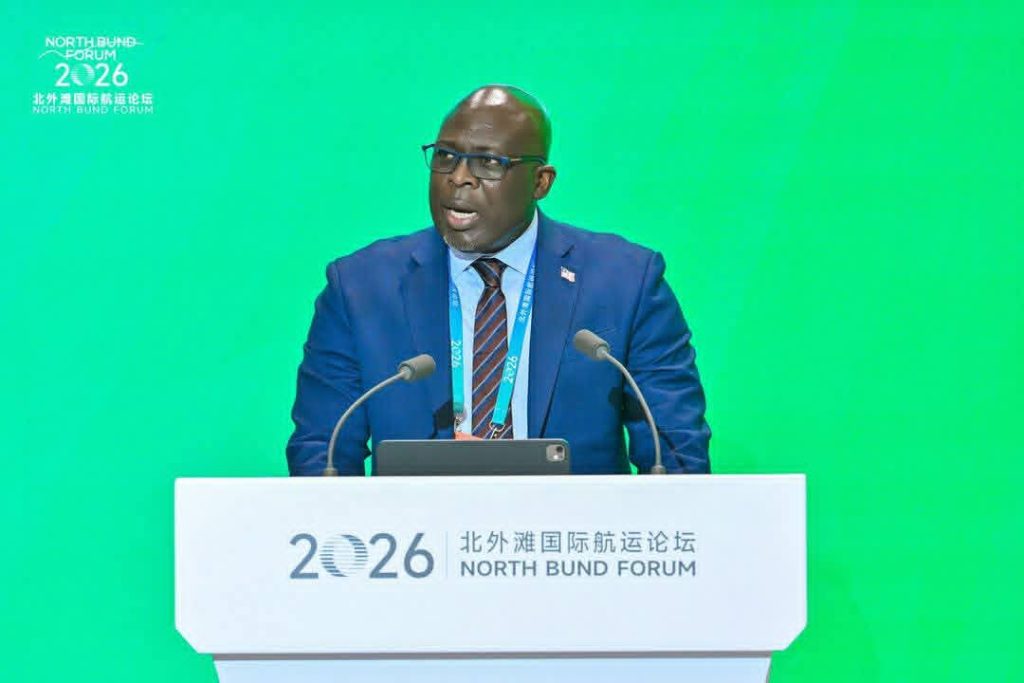
SHANGHAI, China – Liberia has called for a fair, inclusive and equitable transition to green shipping, warning that developing countries must not be left behind in global efforts to decarbonize the maritime industry.
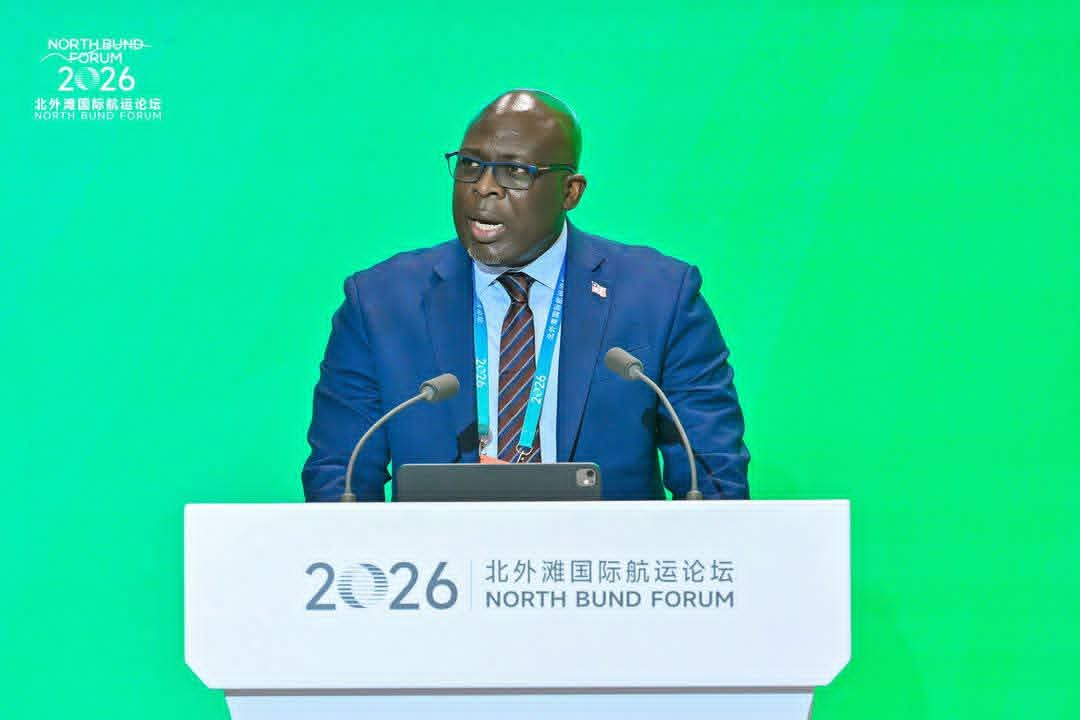
The call was made by the Commissioner and Chief Executive Officer of the Liberia Maritime Authority (LiMA), Cllr. Neto Zarzar Lighe Sr., in an address delivered at the 6th North Bund Forum held at Shanghai Maritime University in Shanghai, People’s Republic of China.
Addressing global maritime leaders, Commissioner Lighe said green shipping is fast becoming the global benchmark for evaluating ships, ports, fuels and maritime technologies. He noted that while Liberia fully supports the shift, the transition must strike a balance between environmental sustainability and the development priorities and financial capacities of developing nations.
“Liberia broadly supports the transition to green shipping,” Lighe affirmed, reaffirming the country’s commitment to protecting the marine environment and combating climate change.
However, he stressed that the transition must be guided by the principles of common but differentiated responsibilities, climate justice and equitable development. According to him, developing countries require adequate, predictable and sustainable support to manage the structural and economic changes associated with maritime decarbonization.
Commissioner Lighe outlined key pathways to greener shipping, including the adoption of alternative and low-carbon fuels, energy-efficient vessel technologies, improved operational practices, emissions monitoring systems, and investment in modern port infrastructure.
He cautioned that these measures pose significant challenges for developing economies, particularly in accessing affordable alternative fuels, securing financing, acquiring new technologies and building the infrastructure needed to support them.
He pointed out that the wider adoption of fuels such as methanol, ammonia and hydrogen will require robust safety standards, technical expertise, compatible vessels and reliable bunkering infrastructure, emphasizing that their environmental benefits depend largely on production methods and lifecycle emissions.
Cllr. Lighe therefore called for practical financing mechanisms, technology transfer and capacity-building initiatives to enable developing countries to participate meaningfully in the transition.
He stressed that green shipping cannot be achieved through regulations and technology alone, but requires stronger international cooperation, coordinated policies and sustained investment in maritime infrastructure, education and training.
The LiMA boss highlighted the importance of reliable emissions monitoring, reporting and verification systems to strengthen accountability and improve vessel energy efficiency, citing the International Maritime Organization’s Energy Efficiency Existing Ship Index (EEXI) and Carbon Intensity Indicator (CII), as well as the European Union’s Monitoring, Reporting and Verification (MRV) requirements.
He noted that developing countries will need trained personnel, reliable data systems and strong institutional capacity to effectively implement these instruments.
Commissioner Lighe further called for regulatory certainty to guide shipowners, financiers, seafarers and port operators, warning that predictable and internationally coordinated rules are essential to encourage investment, support innovation and avoid fragmentation in the shipping industry.
“No country should be left behind,” he emphasized, underscoring that the global transition must not deepen existing inequalities or impose disproportionate burdens on nations with limited resources.
As one of the world’s leading ship registries, Liberia remains committed to engaging constructively in international negotiations aimed at advancing green shipping and maritime decarbonization, he said.
Cllr. Lighe reaffirmed LiMA’s commitment to supporting the safe adoption of emerging maritime fuels and technologies and working with shipowners and operators of Liberian-flagged vessels to ensure compliance with international regulations.
He identified governments, international organizations, academic institutions, research centers, shipowners, financiers and technology providers as essential partners in developing the expertise and solutions needed for the transition, and specifically lauded Shanghai Maritime University for its role in maritime education, research and innovation.
Concluding, Commissioner Lighe described the transition to green shipping as both a challenge and an opportunity to modernize the maritime industry, stimulate innovation and strengthen environmental protection.
He said its success will depend not only on technological advances and regulatory measures, but also on the willingness of nations to cooperate, share knowledge, mobilize resources and fairly distribute the benefits and responsibilities of decarbonization.
For Liberia, he maintained, the objective remains advancing a greener, safer and more sustainable shipping industry while respecting the legitimate development aspirations and circumstances of all nations.