 By
By By Staff Writer
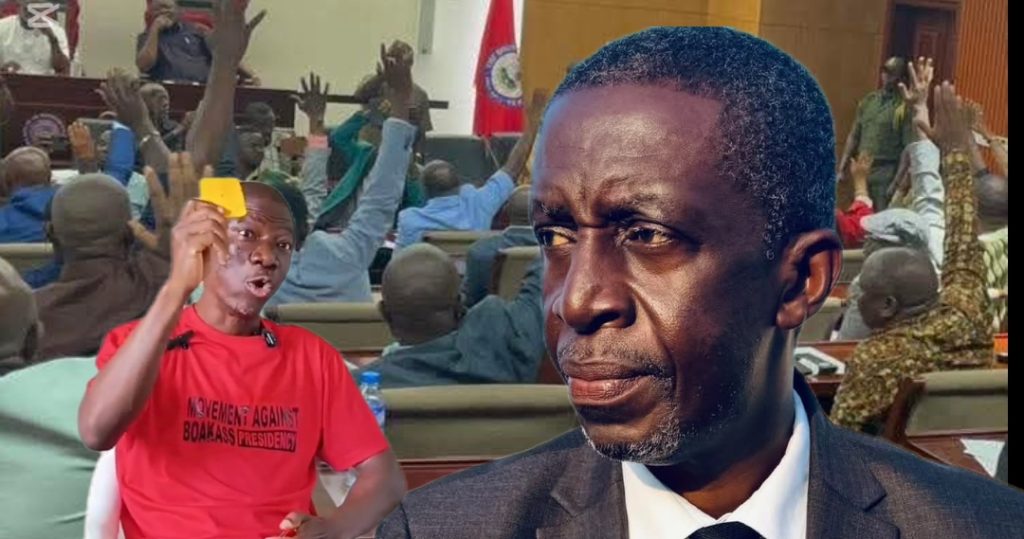
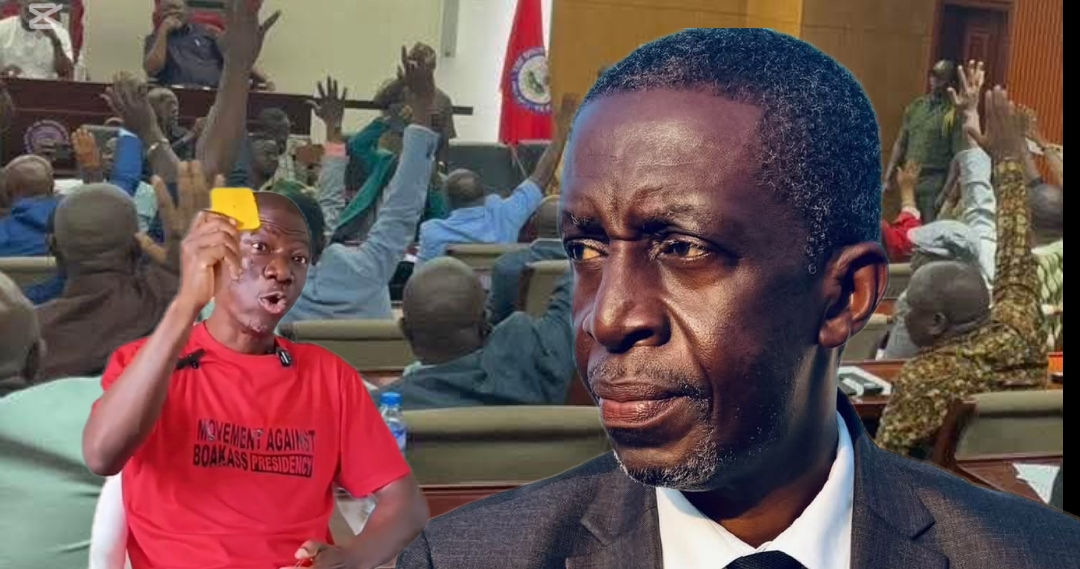
Monrovia, Liberia — Prominent Liberian lawyer and politician, Tiawan Saye Gongloe, has criticized the expulsion of District 10 Representative Yekeh Kolubah, describing the decision as a “profound constitutional error” that threatens the foundation of Liberia’s democracy.
In a detailed legal opinion, Gongloe argued that the action taken by the House of Representatives of Liberia goes beyond internal discipline and raises critical questions about whether the country is being governed by law or by political sentiment.
Gongloe emphasized that the core issue is not whether Kolubah’s remarks on the Makona River boundary dispute were right or wrong, but whether lawmakers acted within the confines of the 1986 Constitution of Liberia.
He cited key provisions of the Constitution, including Article 14 on freedom of thought and conscience, Article 15 on freedom of expression, and Article 11(c) on equal protection under the law, stressing that these rights are binding on all branches of government, including the Legislature.
“The House of Representatives is not above the Constitution. It is subject to it,” Gongloe asserted.
According to Gongloe, Kolubah’s statement—suggesting that a disputed area near the Makona River may belong to Guinea—may have been controversial but did not violate any Liberian law.
He argued that the statement neither constituted treason nor incited violence, adding that no provision of Liberia’s penal laws was breached. As such, he concluded that the expulsion was political rather than legal.
Gongloe further noted that national boundaries are determined through treaties and international law, not by the opinion of a single legislator, making the House’s reaction disproportionate.
Referencing past rulings by the Supreme Court of Liberia, Gongloe pointed to cases such as Wolo v. Wolo and Morlu v. House of Representatives, which underscore the supremacy of constitutional protections and limit legislative authority when fundamental rights are at stake.
“These decisions make clear that legislative power must be exercised within the bounds of the law,” he noted.
Gongloe also drew comparisons with other democracies, arguing that controversial political speech is typically countered through debate rather than punishment. He maintained that disagreement is a cornerstone of democratic governance and not an act of disloyalty.
He warned that penalizing lawmakers for expressing opinions—particularly outside legislative chambers—sets a dangerous precedent that could silence dissent and weaken democratic institutions.
The former president of the Liberian National Bar Association cautioned that suppressing free speech risks repeating historical mistakes that contributed to Liberia’s instability, including the events leading to the 1980 Liberian coup d’état.
He argued that denying citizens and lawmakers the right to express views could erode public trust in democratic processes.
As a way forward, Gongloe proposed the establishment of an independent commission to investigate the Makona River boundary dispute and provide authoritative findings. He suggested that such a body would help prevent misinformation and reduce political tension.
He also indicated his willingness to serve on the proposed commission.
Gongloe concluded by calling on the House to reverse its decision, describing such a move not as a sign of weakness but as an act of constitutional responsibility.
“The issue is simple,” he stated. “Does a lawmaker in Liberia have the right to express an opinion, however controversial, without fear of punishment by colleagues?”
He warned that if the answer is no, it could undermine not only legislative independence but the broader democratic system.
“Law must be above politics,” Gongloe declared, urging Liberia’s leaders to reaffirm their commitment to constitutional governance.