By
By By: Staff Writer
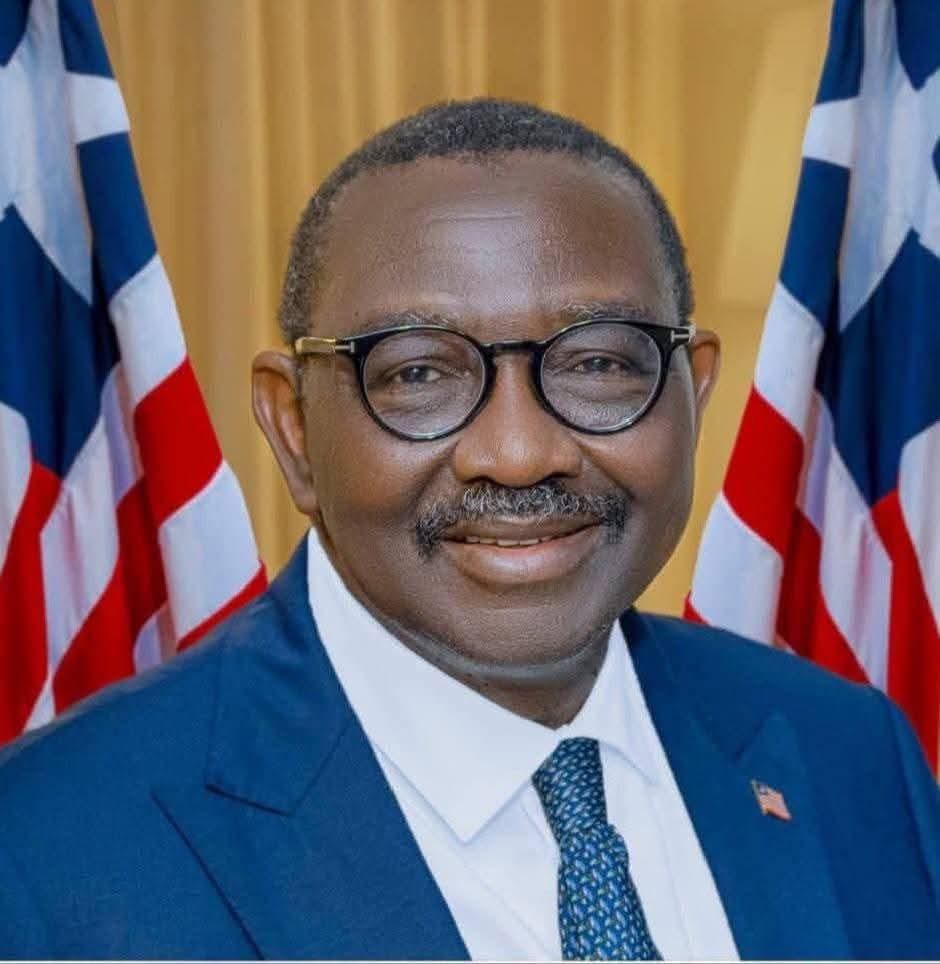
Liberia’s Minister of Justice, Oswald Tweh, has defended the government’s handling of the high-profile corruption case involving former Finance Minister Samuel D. Tweah and other ex-officials, insisting that the convictions secured in the trial demonstrate that “no one is above the law” despite mixed reactions to the jury’s verdict.
Speaking Wednesday during a press conference at the Ministry of Justice in Monrovia, Minister Tweh described the outcome of the case as a significant moment in Liberia’s anti-corruption fight, while acknowledging public disappointment over the acquittal of some defendants, including Samuel Tweah.
“The war against corruption is not decided by a single battle,” the Justice Minister declared. “It is decided by the strength of our institutions, by our willingness to take on difficult cases, and by the message we send to every public servant, past and present.”
The criminal case centered on allegations surrounding the transfer and withdrawal of more than US$6 million and over LD$1 billion in public funds through accounts linked to the Financial Intelligence Agency (FIA), funds prosecutors argued were moved outside lawful budgetary procedures and never properly accounted for.
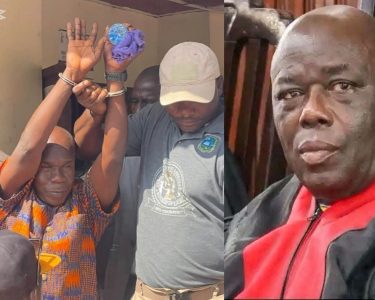
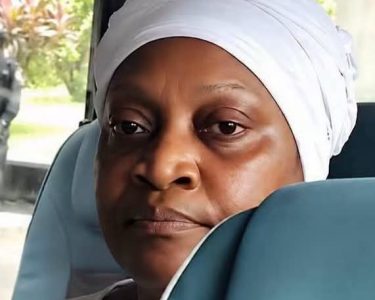
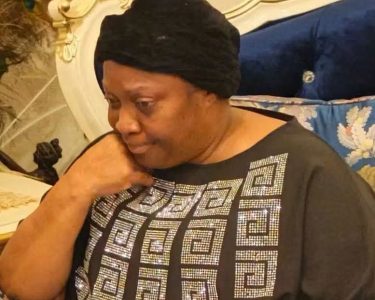
Following the jury’s verdict delivered on May 8 at Criminal Court “C,” former Solicitor General and Acting Justice Minister Nyenati Tuan was convicted of theft of property, criminal facilitation, and criminal conspiracy. Former National Security Advisor Jefferson Karmoh was convicted of criminal facilitation and conspiracy.
However, former Finance Minister Samuel Tweah and former FIA Comptroller D. Moses P. Cooper were acquitted on all charges, while the jury failed to reach a unanimous decision in the case against former FIA Director General Stanley S. Ford.
“Not Small Figures”
Minister Tweh rejected suggestions that the government lost the case because some defendants were acquitted, arguing instead that the convictions of senior officials represented a major legal and institutional milestone.
“These are not small figures. These are not minor victories,” he said. “These convictions send a clear, unmistakable message: whether you sit in the Ministry of Justice, the Executive Mansion, or at the head of an integrity institution, if you betray the public trust, you will be investigated, prosecuted, and may be convicted.”
He further maintained that the acquittals themselves demonstrated the independence of Liberia’s judiciary.
“An independent judiciary that acquits, as well as convicts, is the hallmark of a nation governed by law,” he stated.
Supreme Court Battle Highlighted
A major portion of the Minister’s remarks focused on what he described as the government’s earlier legal victory before the Supreme Court, after defense lawyers attempted to halt the prosecution through a writ of prohibition.
According to Tweh, the defendants argued that the transactions were tied to national security operations authorized by the presidency and therefore protected from prosecution under claims of presidential immunity and classified security secrecy.
But the Justice Minister said the Ministry of Justice and the Liberia Anti-Corruption Commission successfully resisted those arguments before the Supreme Court.
“It established a critical principle,” Tweh asserted, “that neither a former President’s directive nor a claim of national security secrecy can be used as a blanket to block a criminal investigation into the disappearance of public funds.”
Questions Over Missing Funds
In one of the strongest sections of his statement, the Justice Minister outlined what prosecutors believe the trial established about the handling of the disputed funds.
He said evidence presented during the proceedings showed that more than LD$1 billion and US$500,000 were transferred into FIA accounts outside the national budget process and later withdrawn in cash.
“The money simply moved, on the instruction of the Minister of Finance, from government accounts into an FIA operational account,” he said.
Tweh alleged that the FIA Comptroller at the time personally signed and withdrew the funds but that no credible records were produced during the trial to explain how the money was spent.
“Not a single receipt, not a single disbursement sheet, not a single credible witness has ever been produced to show where the money went,” the Minister declared.
He also challenged the defense’s reliance on national security secrecy.
“National security secrecy protects operational methods and sources. It does not, and never will, protect a simple account of where public money went,” he said.
Ministry Promises Internal Review
Despite defending the prosecution team, the Justice Minister acknowledged that the case offered lessons for the government and announced an internal review of the entire prosecution process.
He praised the prosecution team led by Solicitor General Augustine C. Fayiah, saying prosecutors worked on the case for nearly two years and presented multiple witnesses and documentary exhibits during trial.
At the same time, he disclosed that the Ministry of Justice and the Liberia Anti-Corruption Commission would review the investigation, evidence presentation, and jury selection process to improve future prosecutions.
“That is how we build a stronger prosecutorial capacity,” Tweh said. “That is how we prepare for the next case and the case after that.”
Convicted Officials Seek New Trial
The Justice Minister confirmed that convicted defendants Nyenati Tuan and Jefferson Karmoh have already filed motions seeking a new trial, while the government has filed formal resistance to those motions.
If the motions are denied, sentencing proceedings will follow, after which the convicted officials will retain the right to appeal before the Supreme Court.
“The Ministry will make a vigorous submission to the court, arguing for sentences that reflect the gravity of the defendants’ crimes and serve as a deterrent to future abuse of public office,” Tweh stated.
Boakai’s Commitment Reaffirmed
Minister Tweh also defended President Joseph Boakai against accusations that the case was politically motivated, insisting the prosecution was based solely on evidence uncovered by investigators.
“This trial was not a political project. It was a legal one,” he said.
According to him, President Boakai’s administration remains committed to allowing anti-corruption institutions to operate independently regardless of the political consequences.
Closing his remarks, Tweh described Liberia’s anti-corruption campaign as “a marathon” rather than a sprint, pledging that public officials accused of stealing state resources would continue to face prosecution.
“Those who steal from the people will be pursued. They will be exposed. And sooner or later, they will face justice,” the Justice Minister declared.