By
By By Staff Writer
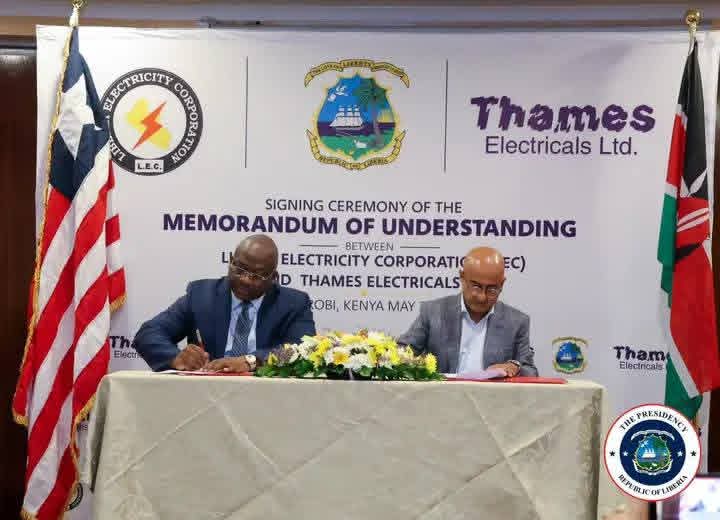
Monrovia – Liberia is moving to end its reliance on imported electrical equipment with a US$26 million agreement to build the country’s first electrical manufacturing plant.
The deal, signed Tuesday in Nairobi between the Liberia Electricity Corporation and UK-based Thames Electrical Limited, will see transformers, conductors, switchgears, and smart meters produced locally once the facility is operational.
Shifting from Importer to Producer
For decades, Liberia has sourced nearly all electrical components abroad, a process that slows repairs and drives up costs. “This project is about changing that equation,” said President Joseph Nyuma Boakai at the signing on the sidelines of the Africa Forward Summit. “Producing these materials here means faster deployment, lower costs, and control over our own energy infrastructure.”
The plant is positioned as a cornerstone of the administration’s push for industrial growth and technology transfer.A Play for Regional RelevanceOfficials say Liberia’s existing cross-border power connections could turn the plant into more than a domestic solution.
By manufacturing locally, Liberia hopes to supply neighboring markets and position itself as a distribution hub for West Africa. The Executive Mansion noted that regional energy ties could amplify the economic impact beyond Monrovia.What It Means for LEC and Consumers
For the Liberia Electricity Corporation, the shift promises shorter procurement timelines and fewer bottlenecks in maintaining the grid.
“This investment will help us get materials faster and improve efficiency across the sector,” said LEC Managing Director Mohammed Sheriff.
Faster repairs and more reliable supply chains could translate to fewer outages and lower operational costs, though pricing will depend on the plant’s eventual production scale.
Jobs and Skills on the Line
Thames Electrical Limited’s CEO welcomed the partnership and committed to working with Liberian stakeholders to deliver quality production.
The project is expected to create technical jobs and facilitate skills transfer, aligning with broader goals to reduce youth unemployment and build local expertise in advanced manufacturing.