 By
By 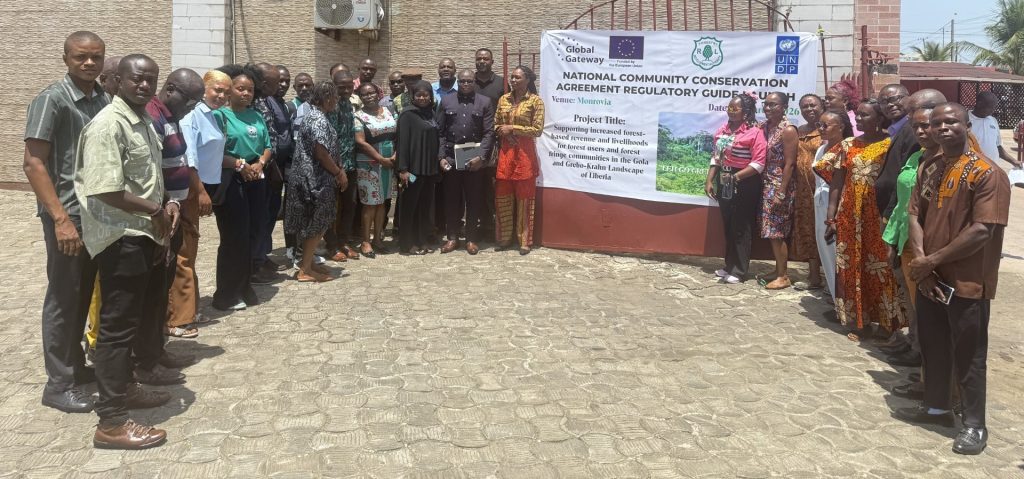
Monrovia — Liberia has taken a significant step toward advancing community-led environmental protection with the official launch of a new Community Conservation Agreement (CCA) Guide aimed at strengthening forest governance and promoting sustainable livelihoods.
The guide, developed under the European Union-funded “LEH GO GREEN” Project, is being implemented by the United Nations Development Programme in partnership with the Forestry Development Authority. It provides a standardized framework to support conservation agreements between forest-dependent communities, government, and partners.
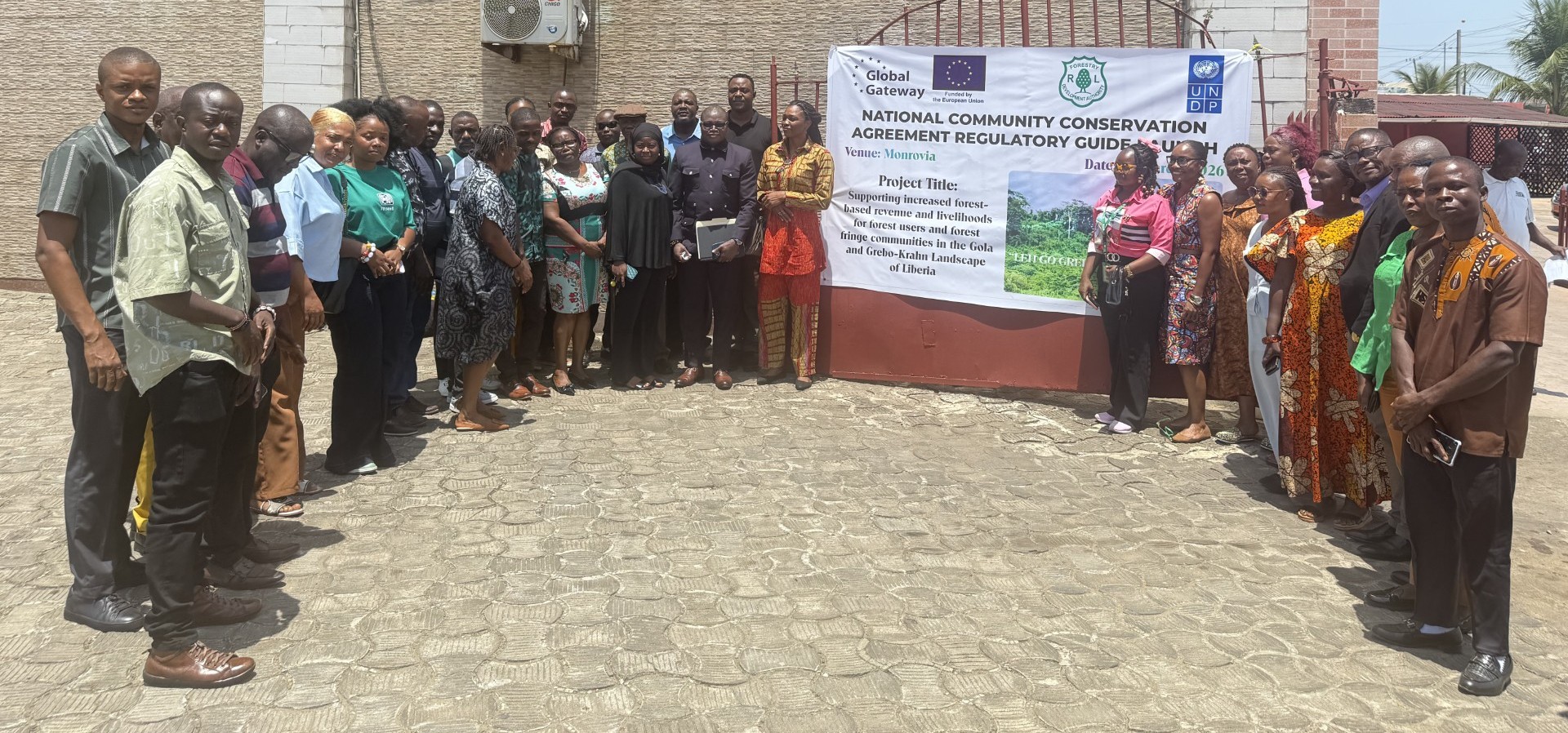
The launch event in Monrovia brought together government officials, international organizations, civil society actors, and community representatives, all emphasizing the need to balance environmental protection with local development.
Addressing Gaps in Conservation Framework
For years, Liberia’s forests—among the most biodiverse in West Africa—have faced competing pressures from commercial logging and conservation efforts. While community forestry has expanded, experts say the absence of a clear conservation contracting system has hindered effective implementation and accountability.
The newly introduced guide seeks to close that gap by establishing procedures for negotiation, implementation, and monitoring of conservation agreements. It is expected to improve transparency, reduce disputes, and ensure equitable benefit-sharing for communities.
Speaking at the launch, Salimatu Gilayeneh described the guide as more than a technical document.
“Community Conservation Agreements are more than just documents. They are a promise for a sustainable future,” she said, stressing that the framework places communities at the center of climate action and biodiversity protection.
Growing Interest in Conservation
According to officials, the Forestry Development Authority has granted forest management rights to 57 communities across the country. While most have entered commercial logging arrangements, at least 11 communities have expressed interest in conservation-focused agreements as an alternative pathway.
However, without a standardized system, negotiations have often been uneven, limiting the effectiveness of such initiatives.
Nora G. Bowier, speaking on behalf of FDA Managing Director Rudolph J. Merab, noted that the absence of a structured framework had long constrained conservation efforts.
She explained that the development of the guide was driven by increasing demand from communities, particularly in the Gola and Grebo-Krahn forest landscapes, where pressures from climate change and economic challenges continue to intensify.
Collaborative Development Process
The guide was developed through a consultative process involving national and international conservation organizations, including Conservation International, the Society for the Conservation of Nature of Liberia, the Wild Chimpanzee Foundation, and the Royal Society for the Protection of Birds.
Stakeholders say the process ensured that the final document reflects practical realities on the ground while promoting inclusivity and accountability.
Linking Conservation and Livelihoods
The LEH GO GREEN Project, which runs for three years, focuses on restoring forest ecosystems, addressing climate change, and improving livelihoods in key biodiversity areas.
Officials emphasized that the new framework aligns conservation goals with economic opportunities for local communities, reinforcing the idea that environmental sustainability must go hand-in-hand with human development.
“We are empowering communities to manage their forests sustainably while ensuring that conservation delivers real benefits,” Bowier said.
Looking Ahead
With the guide now officially launched, implementing partners are expected to roll out community awareness and training initiatives in the coming months. Monitoring systems will also be established to track progress and identify opportunities for scaling up conservation efforts.
Stakeholders at the event described the launch as a critical milestone in Liberia’s environmental governance, signaling a shift toward more inclusive and community-driven conservation strategies.
As Liberia continues to navigate the challenges of climate change and deforestation, the success of the new framework will likely depend on sustained collaboration between government, communities, and international partners.