 By
By 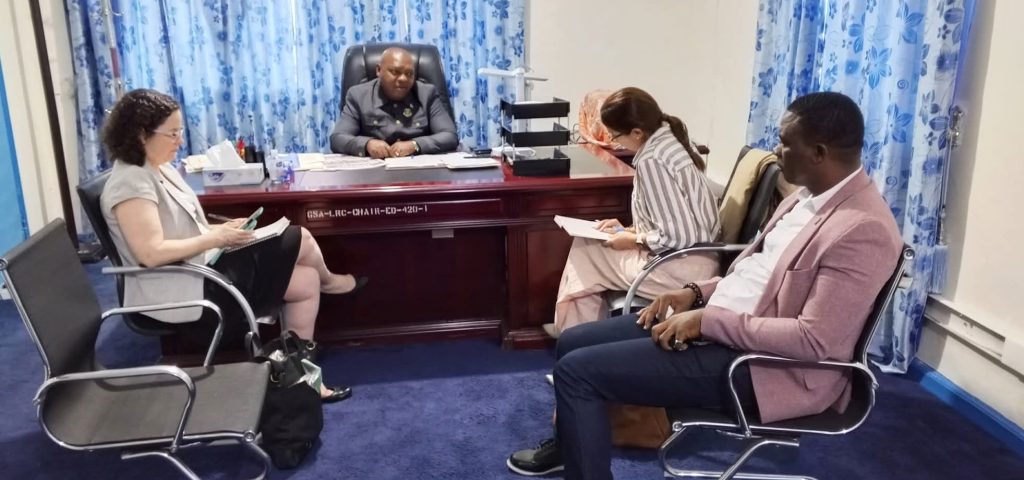
Monrovia — The Law Reform Commission (LRC), Human Rights Watch (HRW)–New York, and the Civil Society Human Rights Advocacy Platform have reaffirmed their commitment to a coordinated and unified approach toward the establishment of Liberia’s proposed War and Economic Crimes Court.
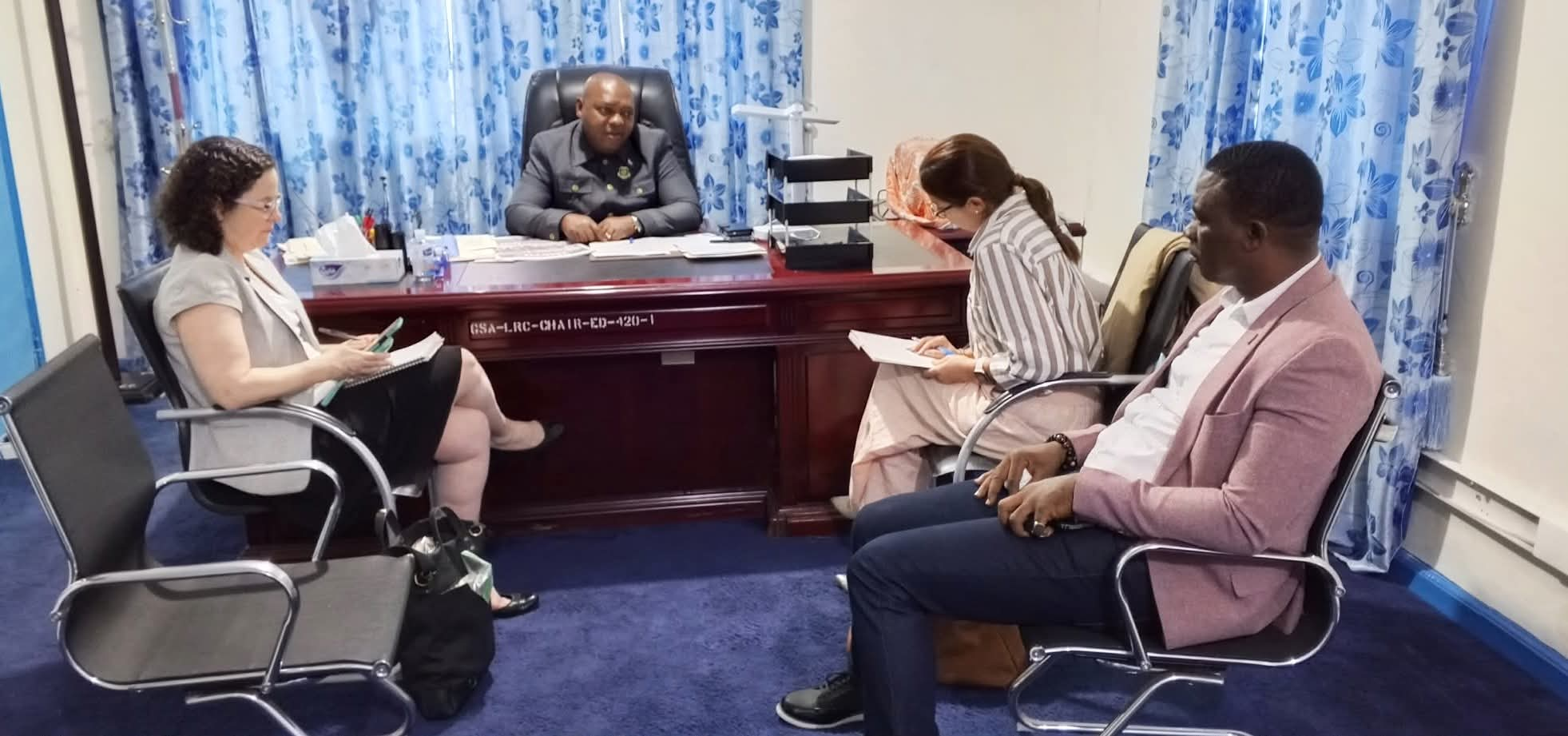
The discussions were held at the Law Reform Commission’s headquarters in Mamba Point, Monrovia, bringing together LRC Chairperson and Chief Executive Officer Cllr. Bornor M. Varmah and a delegation from Human Rights Watch and Liberia’s civil society community. The delegation included Michelle E. Reyes Milk, Senior Counsel with HRW’s International Justice Program; Elise Keppler, Executive Director of the Global Justice Center at HRW; and Adama Dempster, Head of Secretariat of the Civil Society Human Rights Advocacy Platform, which represents a coalition of 30 leading human rights organizations in Liberia.
Ms. Reyes Milk said the visit was conducted within the framework of Liberia’s ongoing transitional justice discussions. She explained that the delegation sought to engage key national actors involved in accountability efforts, particularly those playing a role in the process leading to the creation of the War and Economic Crimes Court. According to her, the team was interested in assessing progress, understanding the LRC’s contribution, and identifying ways international partners can support the process. She also commended the Liberian government for showing political willingness to advance the court’s establishment.
Welcoming the delegation, Cllr. Varmah emphasized the Law Reform Commission’s commitment to justice and accountability for crimes committed during Liberia’s civil conflict. He highlighted the contributions of the Liberia National Bar Association, civil society organizations, and the LRC in sustaining national dialogue that culminated in the establishment of the Office of the War and Economic Crimes Court–Liberia (OWECC-L).
Cllr. Varmah disclosed that two draft bills have reportedly been submitted to the President of Liberia for the creation of the court, stressing the need for careful harmonization to avoid legal inconsistencies. He said the LRC will take the lead in aligning the draft legislations and convening key stakeholders, including civil society, OWECC-L, the Independent National Commission on Human Rights, and the LNBA, to ensure a coherent and credible process.
He further called for a multi-track approach, noting that beyond passing the law, Liberia must begin building capacity by training judges, prosecutors, and investigators. He explained that prosecuting international crimes requires specialized expertise and that the Truth and Reconciliation Commission’s report alone may not meet evidentiary standards in court proceedings.
Speaking for civil society, Adama Dempster urged swift action, warning that continued delays could undermine justice as victims, witnesses, and alleged perpetrators continue to pass away. He expressed concern over the expiration of the current Executive Order governing the process in April 2026 and cautioned that prolonged timelines could expose the process to political divisions, particularly as elections approach.
In response, Cllr. Varmah reiterated that the Law Reform Commission is legally mandated to spearhead law reform efforts in Liberia and will therefore coordinate the harmonization of the draft bills before legislative enactment. He assured that civil society’s perspectives will remain central to the process as stakeholders work toward a unified national voice on the establishment of the War and Economic Crimes Court.