By
By By: Contributing Writer
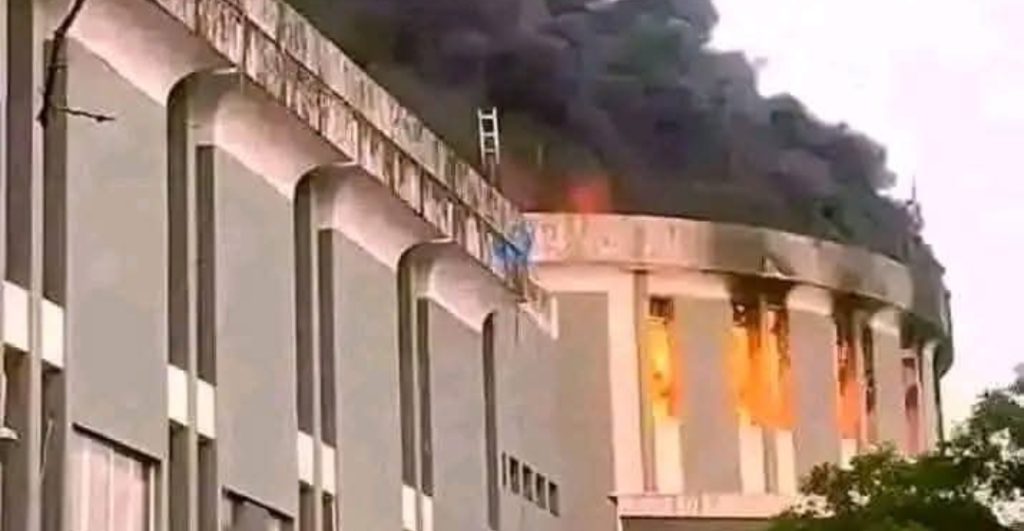
Capitol Hill, Monrovia – In one of Liberia’s most politically charged criminal cases in recent memory, former House Speaker Cllr. Fonati Koffa and several co-defendants on Monday pleaded not guilty to allegations that they orchestrated an arson attack on the Capitol Building earlier this year. The plea sets the stage for a blockbuster courtroom showdown that revives painful memories of past Capitol fires, historic legal battles, and the enduring question of how political power intersects with justice in Liberia.
Jury selection begins Tuesday, November 18, launching what many legal observers say could become a precedent-setting trial with broad implications for governance and the rule of law.
A CAPITOL BUILDING WITH A FIERY HISTORY
The alleged arson comes against the backdrop of a Capitol complex long shadowed by fire and controversy.
Liberia’s original Capitol Building —a symbol of national democracy—was first consumed by flames in 1956, just three years after its construction was completed. Though officially attributed to an electrical fault, the blaze triggered public suspicion and heated political debate. The rebuilding effort became a national priority, entangled in procurement disputes and power struggles within the Tubman-era Legislature.
By the late 1960s, the “new” Capitol stood as a testament to reconstruction—but its troubles weren’t over. A second fire in the early 1970s, this time destroying sections of the Senate wing, sparked accusations of sabotage, criminal investigations, and a protracted legal battle over responsibility. Courts wrestled for years with conflicting testimony, political pressure, and contested forensic findings, ultimately closing the case without a definitive culprit.
Since then, the Capitol’s history has blended governance, power, and periodic crises—making the 2024 fire feel to many Liberians like history repeating itself.
A NEW ARSON CASE, A FAMILIAR POLITICAL STORM
Prosecutors now allege that Koffa and his co-defendants intentionally set or facilitated the latest blaze in an attempt to disrupt legislative operations and influence political outcomes. They claim to possess forensic evidence, witness statements, and surveillance footage tying the group to the incident.
The defendants, however, insist the case is entirely political. Appearing calm as the charges were read, they blasted the indictment as speculative and unsupported by hard evidence.
“This is a political hit job dressed up as a criminal case,” one defense lawyer argued, adding that the state is relying on “layers of hearsay crafted to destroy reputations.”
The case is already drawing intense public and diplomatic attention. Court observers say its impact could extend far beyond the fate of the accused:
Judicial integrity will be tested as the court weighs politically sensitive evidence.
Legislative stability may hinge on the trial’s outcome, especially if sitting lawmakers are implicated.
Public confidence in the justice system is on the line after years of criticism over selective prosecution and opaque investigations.
The government, for its part, has vowed a thorough, impartial trial. Prosecutors say they are “fully prepared” to present a compelling case when proceedings formally begin.
As jury selection begins Tuesday, the trial is expected to be closely monitored at home and abroad. With its mix of historical echoes, political intrigue, and legal uncertainty, the Capitol arson case is poised to become one of the defining courtroom battles of the decade.
For a country whose Capitol has burned before—both literally and figuratively—the coming weeks promise a test not only of individual guilt or innocence, but of Liberia’s ability to confront its past while safeguarding its democratic future.