 By
By
By Alphanso G. Kalama;
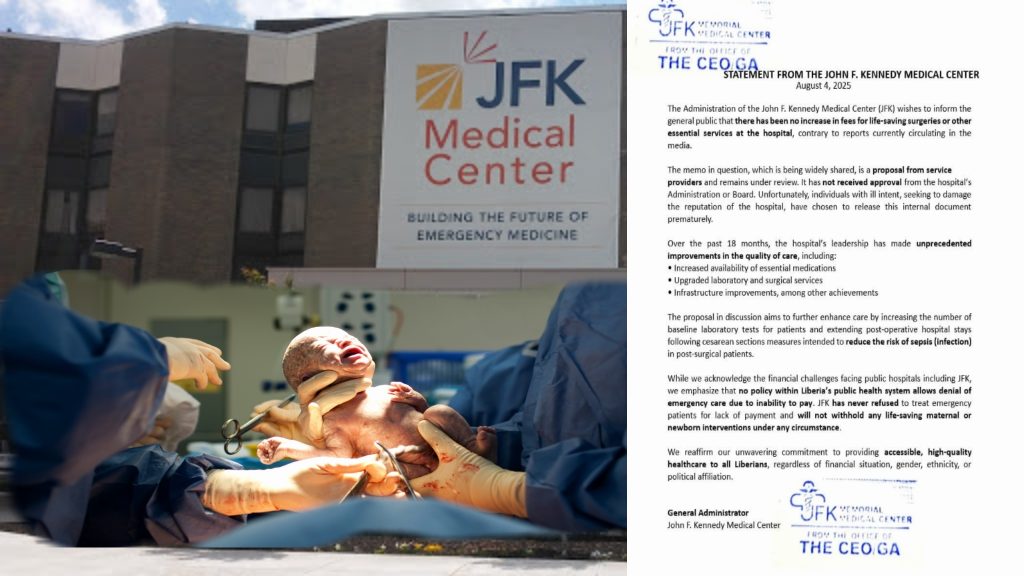
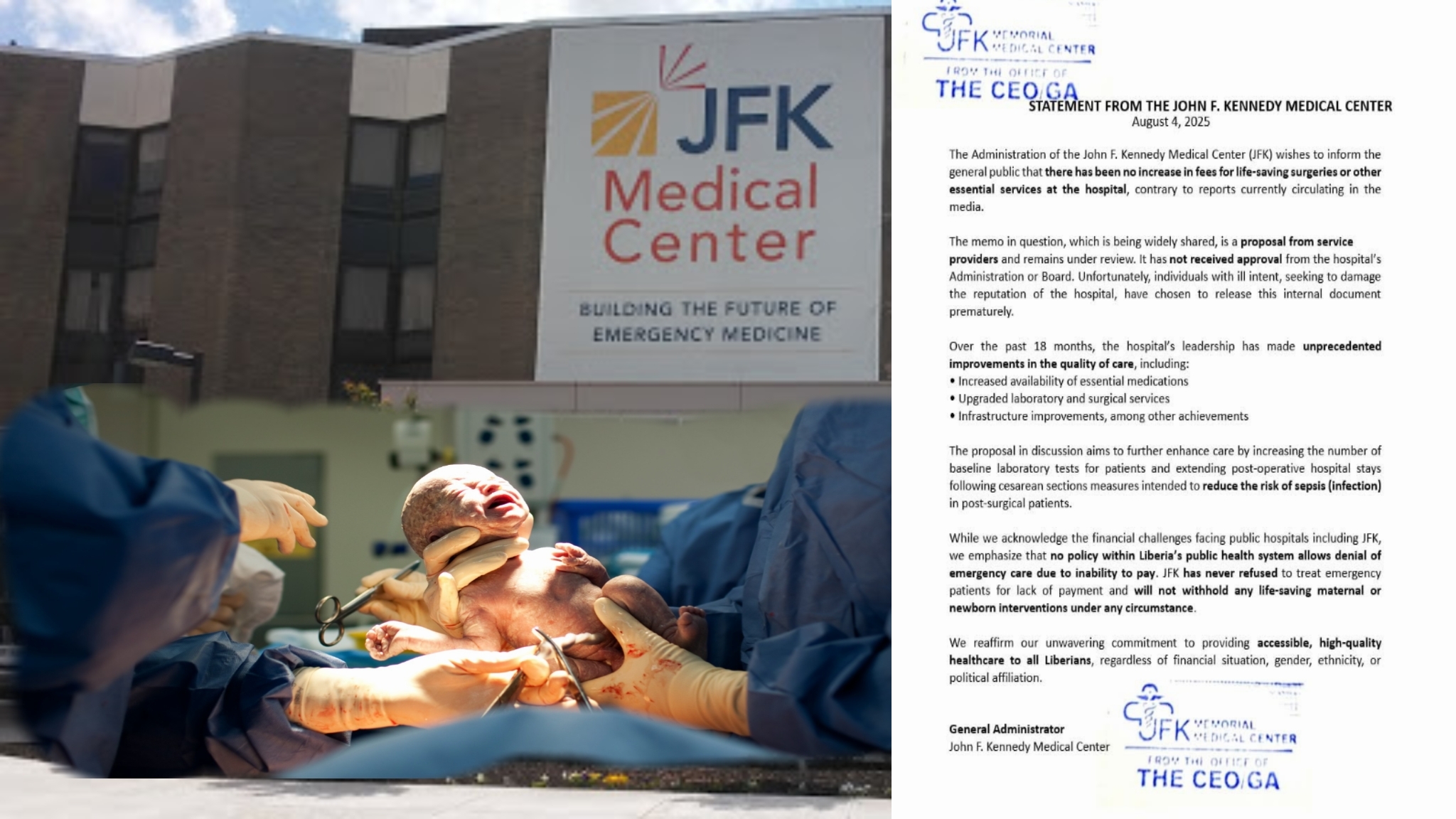
Monrovia – The John F. Kennedy Medical Center (JFKMC) has issued a strong public statement to clarify its position following mounting public backlash over a leaked internal memo suggesting a mandatory \$65 USD payment for Cesarean section drugs and medical supplies. According to the hospital’s administration, the document which has been widely circulated and criticized was merely a proposal under internal review and not an approved policy, contrary to what the public had been led to believe.
The hospital emphasized that there has been no increase in fees for life-saving surgeries or other essential services, distancing itself from the controversial memo that originated from service providers and was stamped by the hospital’s Chief Pharmacist. The administration stated the proposal had not received approval from JFK’s Board or leadership and condemned its premature release, accusing individuals of acting with “ill intent” to damage the hospital’s reputation.
While JFK’s explanation attempts to ease public anxiety, critical questions remain: If the proposal was not approved, why did it bear the hospital’s official stamp and signature? Why was it circulated to maternity supervisors with instructions and an effective date of August 1, 2025? Were any patients already charged based on the memo before the clarification?
The leaked memo served only as the backdrop to a much larger public concern access to maternal healthcare and the affordability of surgical services in Liberia’s leading public hospital. Critics argue the mixed messaging undermines public trust and exposes flaws in JFK’s internal communication and policy approval process.
In its statement, JFK reaffirmed that no policy within Liberia’s public health system permits denial of emergency care due to inability to pay, emphasizing that the hospital has never refused treatment to patients in critical condition and will not withhold life-saving maternal or newborn interventions under any circumstance. The administration also highlighted improvements made over the past 18 months, including increased access to essential medications, enhanced laboratory and surgical services, and infrastructure upgrades.
The now-disputed memo, while not implemented, has intensified calls for transparency and accountability within Liberia’s health system. Health advocates and the public continue to demand answers about how an unapproved directive could be formalized, stamped, and distributed in the first place. As JFK navigates the fallout, the spotlight remains on its leadership to restore credibility and ensure future health policies undergo proper scrutiny before reaching patients.