By
By: Staff Writer
Monrovia – Liberia will convene a high-level international dialogue on maritime safety, security, and seafarer welfare on Thursday, November 19, 2026, as the country prepares to assume the rotating Presidency of the United Nations Security Council in December.
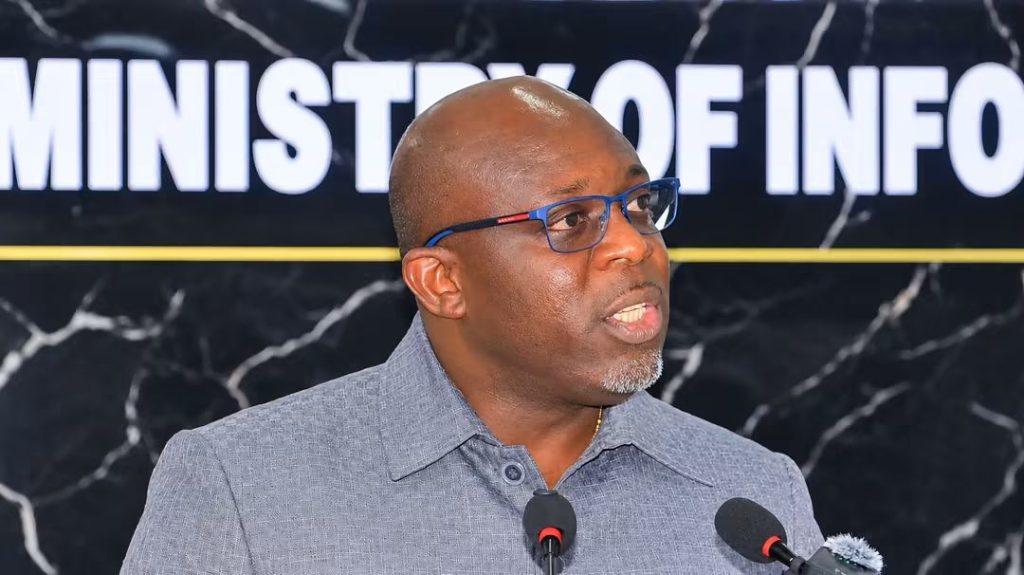
The announcement was made on Tuesday, November 17, 2026, by Cllr. Neto Zarzar Lighe, Sr., Commissioner and Chief Executive Officer of the Liberia Maritime Authority (LiMA), during the Ministry of Information’s regular press briefing.
The event, titled the Marshall High-Level Dialogue on Global Maritime Safety, Security and the Welfare of Seafarers, will be held at the Liberia Maritime Training Institute in Marshall, Margibi County, beginning at 10:00 a.m.
It will be held under the theme: “Enhancing Global Maritime Security and the Welfare of Seafarers for International Peace and Shared Prosperity in a Period of Heightened Insecurity.”
Why Maritime Security Matters Now
Lighe said the dialogue comes at a time of growing threats to global shipping, including geopolitical tensions, armed conflicts, piracy, cyberattacks driven by increased automation and digitalization, illegal, unreported and unregulated fishing, narcotics trafficking, human trafficking, and other transnational organized crimes.
He singled out strategically important corridors such as the Gulf of Guinea and the Gulf of Aden, where conflict and criminal activity continue to threaten vessels, maritime infrastructure, and crews.
“The maritime domain is indispensable to global economic stability, international trade, food security, energy supply and the movement of essential goods,” Lighe said. “When shipping routes are threatened, international trade is disrupted, supply chains are weakened, and the economic consequences are felt by nations and ordinary citizens across the world.”
He stressed that seafarers, who keep global commerce moving, are often working far from their families in increasingly dangerous environments, and that their lives, safety, dignity, and welfare must be protected alongside commercial shipping.
Liberia’s Responsibility as World’s Largest Flag State
As the world’s largest flag State, Liberia holds a significant position in the international maritime industry, Lighe said, noting that the status comes with responsibility beyond maintaining a reputable registry.
He said Liberia’s role includes supporting international efforts to strengthen maritime safety, promote freedom of navigation and communication, protect seafarers, combat maritime crimes, and advance effective international cooperation.
“Maritime security is not the responsibility of one country or one institution,” he said. “No country can independently address the threats confronting today’s global maritime environment.”
What the Dialogue Will Address
The Marshall Dialogue will focus on two major thematic areas:
1. Securing the global maritime domain amid armed conflicts and emerging threats – including the impact of geopolitical tensions on commercial shipping, freedom of navigation, critical maritime infrastructure, and seafarers, with particular attention to piracy, armed robbery at sea, cybercrime, narcotics smuggling and trafficking, and blue crimes.
2. Strengthening global maritime governance and institutional coordination – examining how international maritime institutions, the UN system, and national governments can work more effectively together, improve harmonized implementation and enforcement of international maritime instruments, and prevent unilateral action and fragmentation.
Lighe said the dialogue is intended to move beyond discussion to produce practical recommendations, concrete proposals, and a framework for sustained international cooperation.
President Boakai to Deliver Keynote
President Joseph Nyuma Boakai, Sr. will deliver the keynote address, underscoring the importance the Government attaches to maritime safety and security, Lighe announced.
The keynote will be followed by high-level panel discussions and special statements from key stakeholders within Liberia’s national security architecture.
The dialogue is expected to produce a communiqué capturing the principal deliberations and actionable recommendations.
Those outcomes are expected to include policy recommendations to inform Liberia’s proposed signature initiative during its December Presidency of the UN Security Council; improved coordination among relevant UN agencies and international maritime institutions; stronger international recognition of the protection of commercial shipping and seafarers as essential elements of international peace and security; and proposals for establishing safe corridors for commercial shipping in conflict-affected maritime environments.
Link to UN Security Council Presidency
Lighe said Liberia’s forthcoming UN Security Council Presidency presents an important opportunity for the country to contribute to international conversations on peace, security, and global stability.
“The Marshall Dialogue is an important part of that preparation,” he said. “It provides a platform for Liberia to bring together international expertise, facilitate constructive engagement and help advance practical solutions to challenges that transcend national borders.”
He added: “The security of global shipping is inseparable from international peace and security, and the welfare of seafarers must be central to every meaningful discussion about maritime security.”
Lighe called on the media to treat the dialogue not as just another international conference, but as an opportunity for Liberia to demonstrate leadership and strengthen its voice on global peace and security.
“When we protect our seas, we protect global commerce. When we protect our shipping routes, we protect economic stability. And when we protect our seafarers, we protect the human lives that sustain international trade and global prosperity,” he concluded.