By
By By: Staff Writer
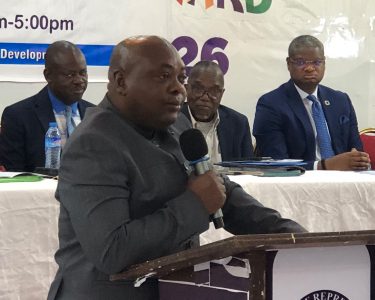
Capitol Hill, Monrovia — A growing controversy surrounding Montserrado County District #10 Representative Yekeh Kolubah is stirring debate not only about his recent comments on Liberia’s territorial integrity, but also about what some observers describe as shifting political standards among those now in power.
Kolubah, long known for his confrontational style and sharp criticism of authority, is facing calls for suspension or expulsion from fellow lawmaker Sumo Mulbah. The move follows remarks he allegedly made on Spoon TV suggesting that parts of Liberia’s border region, particularly near Guinea, may not belong to Liberia.
While the comments have drawn strong condemnation within the Legislature, they have also reignited scrutiny of Kolubah’s political history—particularly his role during the previous administration, when his outspoken and often combative posture earned him praise from opposition figures who now occupy key positions in government.
During those years, Kolubah was widely regarded as a fierce critic of state authority, frequently engaging in heated rhetoric and public confrontations in what supporters described as a defense of democratic accountability. Many of the same political actors now calling for disciplinary action were among those who openly applauded his boldness, framing it as courage in the face of power.
Today, however, that same style is increasingly being characterized by critics within the ruling establishment as reckless and destabilizing.
The contrast has fueled a broader public conversation: are current efforts to discipline Kolubah a principled stand against inflammatory conduct, or a reflection of political hypocrisy?
Supporters of the proposed sanctions argue that the issue goes beyond personality or past alliances. They contend that Kolubah’s recent remarks strike at the heart of national sovereignty and must be treated with the seriousness they deserve, regardless of who makes them. For them, defending Liberia’s territorial integrity is non-negotiable, and any suggestion to the contrary warrants firm institutional response.
Others, however, see a pattern of selective outrage. They point to Kolubah’s history of similar rhetoric—once celebrated by those now in leadership—as evidence of a double standard. To this group, the current backlash reflects less a change in Kolubah’s behavior than a shift in political convenience.
The situation has also revived questions about the boundaries of free speech for lawmakers, particularly when public statements intersect with sensitive national issues. While members of the Legislature enjoy certain protections, critics note that those protections are not absolute, especially when remarks are perceived to threaten national unity or security.
As the matter heads toward possible review by the House Committee on Rules and Order, the debate continues to deepen beyond the individual case. At its core lies a fundamental question about governance and accountability in Liberia: should political actors be judged consistently across different administrations, or do standards inevitably change with the balance of power?
For now, Kolubah remains at the center of a controversy that is as much about political memory as it is about present conduct—leaving Liberians to weigh whether the response to his actions reflects principle, or politics.