 By
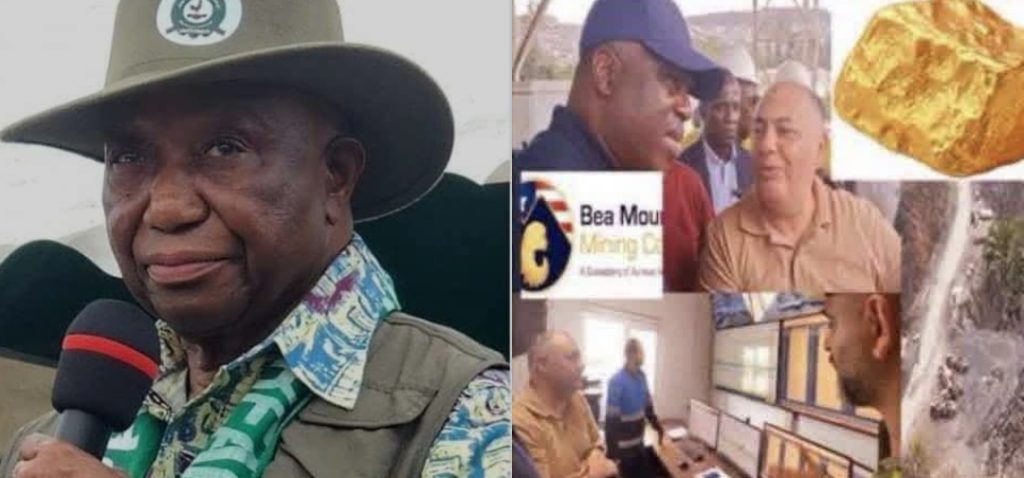
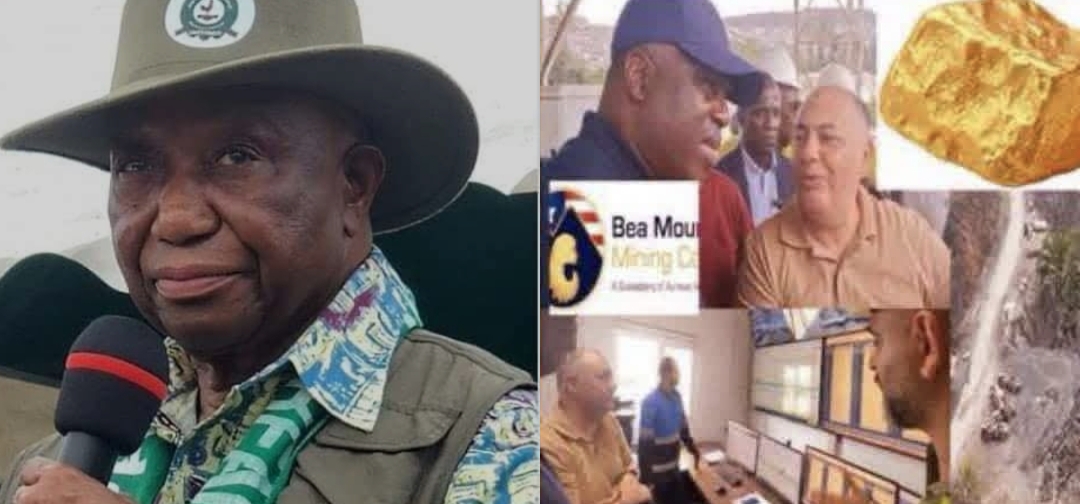
Monrovia – The government is celebrating it as the single most transformative catalyst for the nation’s development in decades. Critics are calling it something else entirely: a dangerous deal where the company brings the money, spends the money, supervises the spending, and reports back on its own work, while Liberia sits in the stands and watches.
On Sunday, November 22, 2026, the Ministry of Information announced that President Joseph Nyuma Boakai, Sr. had accepted a US$5.7 billion plan from the Interministerial Concession Committee under the Master Infrastructure Development Agreement, known as MIDA, with Bea Mountain Mining Corporation. The formal signing is scheduled for Wednesday, November 25, 2026, after which the agreement is to be submitted to the Legislature for consideration.
On paper, the promise is breathtaking. The deal would add 270 megawatts of generating capacity through four new power plants, including a 100-megawatt hydropower plant on the Via River, two hydropower plants on the St. Paul River with a combined capacity of 110 megawatts, and a 60-megawatt biomass plant near the Via dam. Three reservoirs capable of holding a combined 10 billion cubic meters of water would support hydropower generation. Three major transmission lines and grid upgrades, including US$230 million to reinforce substations, transformers and transmission infrastructure, would help deliver electricity to homes, hospitals and businesses across Liberia. A 150-kilometer main transmission line would connect the power plants to the Mount Coffee substation, another 150-kilometer line would link the Via plant to Nimba County, while a 5-kilometer line would serve Bong County.
The agreement is also anchored by the 146-kilometer Liberia Development Road, its flagship highway corridor, plus a separate US$1 billion for additional road networks that will crisscross Liberia and connect all regions of the country. The government says the program will be implemented over five years, with the biomass plant and transmission lines targeted for completion within two years, using innovative financing to reduce Liberia’s debt burden by setting aside additional revenue payable by Bea Mountain, made possible by higher gold prices.
That is the government’s story. The other story, now spreading fast in Monrovia and in mining communities, is asking a far more uncomfortable question: who is actually in charge?
Under the structure being described, Bea Mountain is not just a mining company paying royalties and taxes for the government to spend. It is the financier, the implementer, and in effect, the monitor of a national infrastructure program that touches power, roads, and the economic future of every county. The government, critics argue, is being reduced to a spectator in its own development.
It is a model Liberians have seen before, and they have not forgotten how it ended. For years, USAID operated in Liberia by bringing in the funds, spending the funds, hiring its own contractors and expatriates, and then reporting back on its own success. At the end, USAID said it spent over $20 billion on Liberia, yet many Liberians will tell you that you cannot see any vivid mark of that money on the ground. The money came, the money was spent, the expatriates took their salaries back home, and the country was left with little or nothing tangible to show for it, and with no real room to hold anyone accountable because the spender was also the auditor.
Critics say the Bea Mountain agreement is walking Liberia straight back into that same trap, only this time with a mining company instead of an aid agency.
How, they ask, can the company be the one bringing in the money, spending the money, and doing everything, while the Liberian government sits back and watches? Where is the due diligence? Where is the independent oversight? Where is the separation between the player and the referee?
For fair justification, critics argue, the arrangement should be simple and sovereign: the company should find the money and bring it in, while the government implements, procures, supervises, and accounts to the Liberian people. The company should not be judge and jury over its own project. The government should not outsource its own responsibility to build its own country.
The concern is not about whether Liberia needs power and roads. Everyone agrees it does. Hospitals cannot keep essential equipment running without reliable electricity. Businesses cannot grow with constant interruptions. Farmers cannot reach more buyers without roads. Communities cannot gain better access to essential services without infrastructure. The concern is about who controls the process, who verifies the costs, who checks the quality, and who answers to the people when something goes wrong.
If Bea Mountain prices a power plant, builds it, inspects it, and declares it a success, who in Liberia has the independent technical capacity and political power to say otherwise? If a road is overpriced, underbuilt, or delayed, who will be held responsible? If $5.7 billion is announced today, what mechanism will guarantee that Liberians will be able to point to $5.7 billion worth of power plants, reservoirs, transmission lines, substations, and roads tomorrow?
These are not abstract questions. They are the questions that have haunted Liberia’s concession history for decades, from rubber to iron ore to gold, where big announcements, big dollar figures, and big promises have too often ended in small results for ordinary citizens.
Supporters of the deal will say the innovative financing model protects Liberia from new debt, that the additional revenue from higher gold prices makes it possible, and that Bea Mountain will continue its regular contributions to the Consolidated Account. They will say the Interministerial Concession Committee negotiated for months and that the Legislature will still have to consider it. But for critics, that is exactly the point: the Legislature must not simply rubber-stamp a $5.7 billion conundrum. It must demand to see the full agreement, the procurement rules, the independent audit mechanism, the local content guarantees, the timelines with penalties, and a clear firewall that prevents the company from being both player and referee.
Until those answers are provided, the Bea Mountain deal will remain what its critics now call it: not just the biggest build in Liberia’s history, but the biggest question mark. Is this power, roads, and hope for every county, or is it another expensive lesson where Liberia watches its own wealth being spent by someone else, and is then told to be grateful for it?
The signing is set for November 25. The real test will come after.