 By
By By: The People News Online
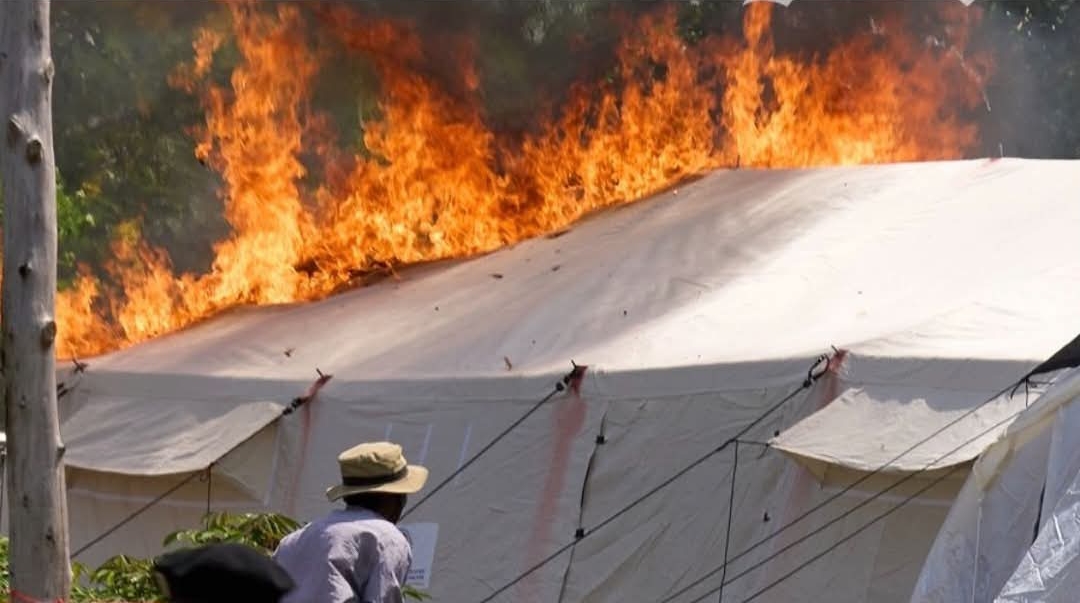
Riots erupted in northeastern DRC this week after angry crowds set fire to Ebola isolation tents at Rwampara hospital, underscoring the deep mistrust and panic gripping the latest outbreak. The violence flared Thursday in Ituri province — the heart of the epidemic — when soldiers moved in to quell the chaos, leaving only the blackened frames of the tents behind.
The unrest was sparked by the death of a 24-year-old man. His family demanded the body for a traditional burial, but health officials refused, citing Ebola’s extreme danger. The virus spreads through direct contact with bodily fluids, and with no vaccine or cure for the Bundibugyo strain, strict protocols are the only defense. So far, the World Health Organization says more than 177 people have died in this 17th outbreak to hit the DRC.
But those rules clash with local custom. “My brother is not dead from Ebola, it’s an imaginary disease,” shouted Jeremie Arwampara, 22, as relatives protested outside the hospital. In rural Ituri, families often embrace the dead and hold large mourning rituals — practices that can rapidly spread infection, said civil society leader Jean Marie Ezadri. “This explains the many instances of contamination,” he noted.
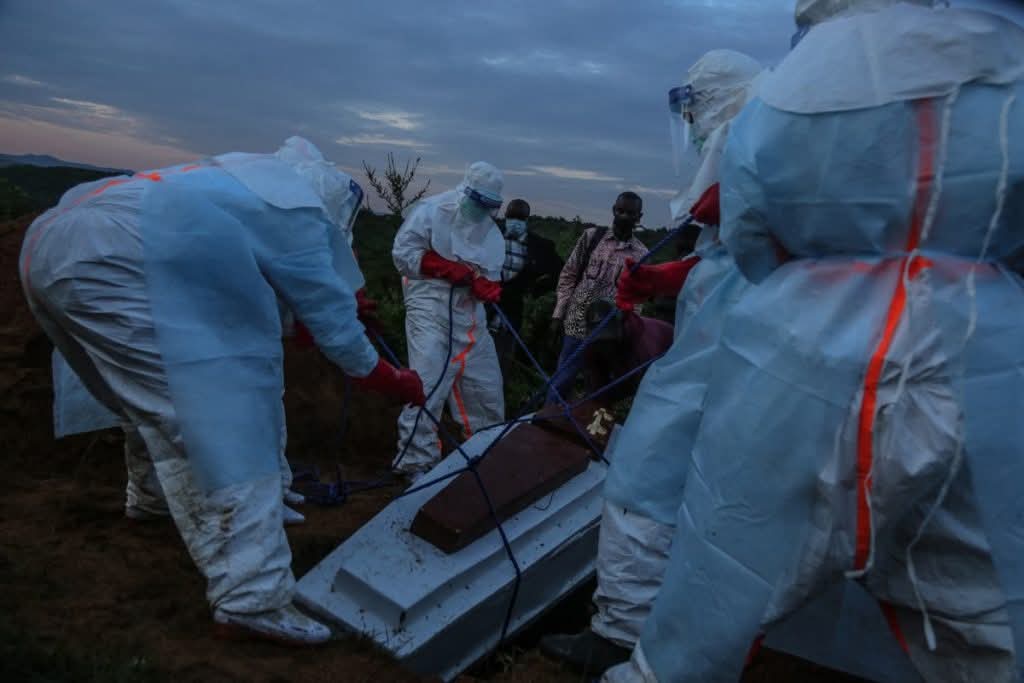
Tensions peaked as three suspected Ebola victims were prepared for burial. Health workers in full hazmat suits carried sealed black-and-white caskets to Rwampara cemetery under heavy military escort, after warning shots dispersed crowds and a nurse was hit by stones. “They’re going to bury our father without us seeing him, it breaks my heart,” said Musa Amuri, watching his father’s casket lowered into the ground. At the graveside, loved ones wept as a pastor read scripture and disinfectant sprayed over the coffins. “He was just sick, let the government come to our aid!” pleaded Maman Leonie, who refused to believe Ebola killed her brother.
Mistrust runs deep in Ituri, a region scarred by armed groups and decades of state neglect. Some rioters were reportedly soldiers linked to a victim, hospital sources said. Even security forces have previously been accused of fueling suspicion toward medics during past outbreaks. In Mongbwalu, residents say suspected cases are still mixed with other patients due to a lack of isolation areas, raising infection risks. “The population has understood the scale of the situation and now knows that bodies must not be touched,” one official said, “but they worry triage areas have still not been set up.”
As dusk fell over Rwampara’s green hills, the hasty, heavily guarded burials laid bare the brutal trade-offs of fighting Ebola in a conflict zone: saving lives while battling fear, grief, and suspicion.